
Best Shotgun Lights in 2025: Home Defense & Tactical Guide

Published on: December 8, 2025
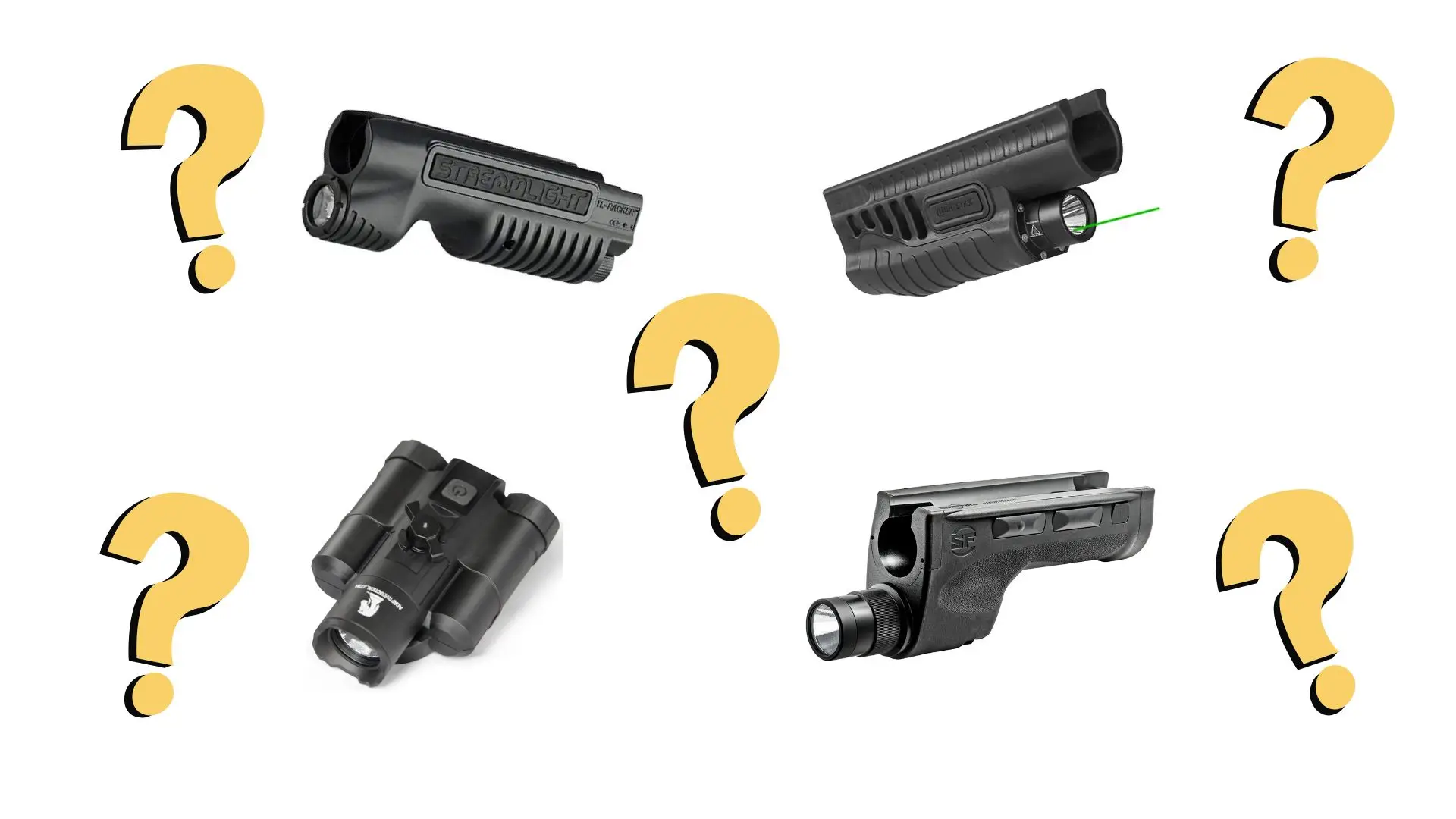
Best Shotgun Lights 2025

Reading Time: 13 mins 27 sec

You need a shotgun light—but mounting one isn’t as simple as attaching a pistol accessory.

Shotguns create unique challenges that generic lights can’t handle. Moving forends snap pressure switch cables, while 12-gauge recoil loosens budget mounts within a hundred rounds.

On top of that, limited mounting space forces difficult compromises.

This guide shows which lights work for your specific shotgun, which mounting methods survive actual use, and how to avoid compatibility mistakes that waste money.

Highlights

  • Streamlight TL-Racker: 1,000 lumens at $160 for pump shotguns
  • Integrated forends eliminate cable problems completely
  • Magazine tube mounts work across platforms with proper maintenance
  • Quality lights withstand forces exceeding 1,000 Gs
  • Budget minimum $150 for reliable defensive performance

Why Shotgun Lights Present Unique Challenges

Shotguns demand solutions that pistols and rifles don’t need.

The Pump Action Problem

Moving forends create serious mounting challenges that you won’t find on other firearms. When you try using pressure switches designed for AR-15s on pump shotguns, they fail quickly because the cables can’t survive the violent cycling motion.

The problem gets worse during rapid pumping. Cables snag, disconnect, or break as your support hand constantly shifts from gripping to slamming the forend forward.

This constant movement also makes tailcap activation nearly impossible without breaking your firing grip. That’s why pump shotgun light mount solutions must account for this mechanical reality.

There’s another issue to consider: magazine tube mounts add diameter exactly where your hand grips the gun. After extended sessions, that extra bulk becomes uncomfortable and affects your control.

Recoil Durability

Twelve-gauge defensive loads generate three to five times more recoil than 5.56 NATO. This violent force destroys components that work perfectly fine on lighter platforms.

That’s why quality shotgun lights need internal shock isolation to protect their LED assemblies. Without proper engineering, the LEDs shake loose within a hundred rounds of use.

The battery contacts also take a beating from these repeated impacts. Cheap lights lose electrical connection as their springs compress or solder joints crack under stress.

Budget clamps are even worse—they loosen gradually until your light rotates or slides off completely.

Beam Pattern Requirements

Shotguns engage threats between 5 and 30 yards—dramatically different from rifle ranges that reach 100+ yards.

This distance difference changes everything about your lighting needs. Wide flood beams illuminate your entire field of vision, while tight spotlights create tunnel vision that misses peripheral threats.

The ideal shotgun flashlight specs fall between 500-1,000 lumens with 10,000-25,000 candela. This range provides instant identification without excessive reflection that could blind you.

Here’s why you shouldn’t go overboard with brightness: indoor spaces amplify bounce off white walls and mirrors. Ultra-high output above 1,500 lumens actually creates blinding glare from your own light, making it harder to see your target.

Mounting Methods Compared

There are three approaches to attaching lights to shotguns, each with specific advantages and limitations.

1. Integrated Forend Lights (Best for Pumps)

These replace your entire forend with a light-equipped unit. You simply remove the factory forend and install the integrated replacement.

Zero clearance issues emerge because the light becomes part of your pump mechanism. Better yet, the ergonomics work perfectly with optimized switch placement built right in.

The lack of external wiring means nothing snags or disconnects. This reliability matters most during rapid cycling under pressure when you need your light to work flawlessly.

Just keep in mind that you’re locked to that platform—your Remington 870 light won’t fit a Mossberg 500. It’s a commitment to one shotgun model.

There’s also a cost consideration with LED failure. After thousands of hours, you’ll need to replace the entire assembly, which runs $150-250 versus just $20 for a separate bulb.

2. Magazine Tube Mounts (Most Versatile)

Clamps attach to your magazine tube, providing short Picatinny rail sections. From there, you can mount any standard weapon light designed for rails.

The best part? You can use quality lights you already own—that Streamlight TLR-1 or SureFire X300 from your pistol works perfectly with the right adapter.

Installation takes just five minutes. Remove the barrel, slide the clamp on, and tighten the set screws.

However, clamps can loosen under heavy recoil. That’s why you’ll need to check tightness every 100-200 rounds to maintain reliability.

Here’s an important tip: Use blue Loctite on mounting screws—not red, which permanently bonds. You need removal access for maintenance and adjustments.

This approach suits shooters who own multiple shotguns or want to share lights between platforms. It’s the most flexible option available.

3. Barrel Clamps (Budget Entry)

Simple clamps attach to barrels, holding flashlight bodies in place. They cost $15-30 and work with handheld flashlights you might already own.

They’re adequate for training or experimenting with placement before making a major investment. Think of them as a way to test what works for you.

However, they loosen frequently under recoil. You’ll find yourself retightening them after every range session, which gets old fast.

Some designs also interfere with barrel removal. You must loosen them completely for cleaning, adding extra steps to your maintenance routine.

Use these for temporary solutions while you’re saving for better gear.

Picatinny Rails (Semi-Auto Only)

Some semi-autos ship with integrated Picatinny rails on their forends—like the Benelli M4, Beretta 1301 Tactical, and various Turkish imports.

These rails provide flexible mounting positions at 12, 3, 6, or 9 o’clock, depending on your preference. You can position your light exactly where it works best for your grip and shooting style.

Standard weapon lights attach directly without needing any adapters. Your existing rifle or pistol lights work immediately, saving you money on dedicated shotgun equipment.

The secure attachment rivals AR-15 quality in terms of durability. Set screws and quick-detach levers provide rock-solid connections that survive thousands of rounds without loosening.

There’s one major limitation: This only works on specific semi-auto models. Most pumps don’t offer factory integration, leaving you with the other mounting options we’ve discussed.

Best Shotgun Lights for Pump Actions

Streamlight TL-Racker

Price: $150 – $180

You get professional performance at reasonable pricing with this integrated forend replacement. It produces 1,000 lumens backed by 20,000 candela with a 283-meter throw.

The runtime holds 1.5 hours on two CR123A batteries, which come included. Plus, the IPX7 waterproof rating handles rain and humidity without issues.

Compatibility covers Remington 870 12-gauge only (not 20-gauge or Super Magnum), Mossberg 500/590 12-gauge with 7-3/4″ slides, and Shockwave models.

The elongated ambidextrous switches accommodate any hand size. You can activate momentary or constant-on modes without adjusting your grip at all.

Textured polymer provides a secure purchase even with wet or gloved hands. The design feels natural from the first time you shoulder it.

Law enforcement agencies widely adopt this for duty shotguns, which tells you everything about its reliability. That professional validation speaks to its performance under hard use.

Installation takes about 15 minutes if you follow the instructions carefully. You’ll need an action wrench to complete the process.

This represents the best value in home defense shotgun light solutions—proven reliability, excellent output, and hassle-free operation all in one package.

SureFire DSF-870/DSF-500

Price: $399

This is a premium shotgun forend with legendary durability. The output reaches 600 lumens with 13,000 candela maximum, or 200 lumens in low mode for extended use.

The large 1.37-inch bezel creates an exceptionally wide beam that’s perfect for close quarters. You’ll see everything in your peripheral vision without needing to move the gun.

Dual-output extends battery life significantly compared to single-mode lights. High mode runs 1.5 hours, while low mode stretches to 3 hours on two CR123A batteries.

The construction features Mil-Spec hard-anodized aluminum that can take serious abuse. O-ring and gasket seals provide weatherproofing that goes beyond what competitors offer.

Ambidextrous controls include momentary and constant-on switches on both sides. A separate output selector lets you switch between power levels without fumbling.

There’s even a system-disabling switch that prevents accidental activation during storage—a feature that matters for cruiser-mounted duty weapons.

The premium price makes sense for professional duty use, harsh environments, or when you’re demanding the absolute best. However, recreational shooters can get 90% of the performance from the Streamlight at just 45% of the cost.

Nightstick Shotgun Forend

Price: $355.20 – $399.60

The impressive 1,200-lumen output exceeds both Streamlight and SureFire options. Green laser integration provides an additional aiming reference, though most experienced shooters prefer white light only for simplicity.

Glass-filled nylon construction reduces weight compared to aluminum models. The 203-meter beam throw exceeds typical shotgun distances by a significant margin.

IPX7 waterproofing matches what you get from Streamlight. The impact and chemical resistance also suit harsh duty environments where your gear takes a beating.

The deep parabolic reflector creates a focused beam that’s better for property defense at 50+ yards. However, this comes at the cost of less peripheral vision indoors compared to wider flood beams.

User reports suggest good durability overall, though it doesn’t quite match SureFire’s legendary reliability. For most shooters, it offers a solid middle ground between budget and premium options.

Adaptive Tactical EX Performance

Price: $129.99

This offers budget-friendly, adequate performance for those watching their wallet. The 300-lumen output sits at the minimum acceptable level for defensive use—you’ll get clear identification at typical 10-25 foot room distances.

The three-hour runtime on two AA batteries beats CR123A competitors hands down. Plus, AA batteries cost less, and you’ll find them anywhere, from gas stations to grocery stores.

Three modes include constant-on, momentary, and strobe for different tactical situations. The aluminum/polymer hybrid construction balances weight and durability reasonably well.

This makes sense for training guns, backup lights, or budget builds where you need something functional without breaking the bank. Just know that limitations show in extended use—300 lumens provides adequate but not impressive illumination.

If you can stretch your budget to $150 – $180 for the Streamlight TL-Racker, you’ll get significantly better performance for just $40-50 more. It’s worth considering before committing to this budget option.

Best Shotgun Lights for Semi-Auto Platforms

Streamlight TLR-RM2

Price: $170 – $320

The low-profile design produces 1,000 lumens with 22,000 candela and 297-meter beam distance. Runtime holds 1.5 hours on two CR123A batteries, giving you plenty of operational time.

The compact design suits semi-autos perfectly—you get minimal bulk with serious illumination. It won’t add unnecessary weight or interfere with your handling.

Ambidextrous switches provide both momentary and constant-on options. The large paddle activation requires minimal pressure, so you can turn it on quickly, even under stress.

The remote pressure switch exits at 90 degrees, which improves wire routing while preserving rail space. There’s also a safe-off feature that prevents accidental activation during storage.

Keep in mind that magazine tube rail compatibility requires the Streamlight Mag Tube Rail, which must be purchased separately for about $20 – $30. That combined investment delivers professional performance worth the price.

Installation is straightforward for the Benelli M4, Beretta 1301, and Mossberg 940. Semi-autos without integrated rails will need a magazine tube adapter to make it work.

Cable management becomes critical when you’re using pressure switches. Route the wire along your forend using M-LOK clips, and leave slight slack at the connections to prevent stress on the wiring.

For best results, mount the light at 3 o’clock if you’re right-handed or 9 o’clock if you’re left-handed. This positioning eliminates suppressor shadow and keeps the beam where you need it.

Traditional Pistol Lights on Semi-Autos

Your existing pistol lights, like the TLR-1 HL or X300, will work on semi-autos with magazine tube adapters. You don’t need to buy a completely new light system.

There’s a significant cost advantage here—that $150-200 light you already own just needs a more or less $30 rail adapter. That’s a fraction of what you’d spend on a dedicated shotgun light.

The output typically ranges from 800-1,000 lumens with 10,000-15,000 candela. These specs suit shotgun distances well for most defensive scenarios.

Activation challenges do emerge without integrated switches, though. You’ll need to reach the tailcap button since most pistol lights don’t support remote switches.

This setup works best for right or left magazine tube mounting, where your support hand reaches the switch naturally. Bottom mounting makes activation awkward and slows you down.

It’s best for multi-gun owners who want to share lights between platforms. It also works great for budget builds, leveraging existing gear or as backup systems.

Critical Compatibility Guide

Compatibility mistakes waste both money and time. That’s why you need to verify these details before buying anything.

Remington 870 Specifics

Express models use different forend diameters than Police/Tactical variants. Some lights fit only the larger Police tubes, so you can’t assume universal compatibility.

The TL-Racker fits 12-gauge only—not 20-gauge, despite some retailers suggesting otherwise. Always verify your specific model against the manufacturer’s compatibility chart before purchasing.

Wingmaster wood forends require complete replacement before you can mount any integrated light. You’ll need to swap to a synthetic forend first, which adds to your total cost.

Magazine capacity also affects tube length, which impacts magazine tube mount placement. Seven-shot tubes differ from four-shot variants in terms of available mounting space.

Heat shields complicate some installations, too. The raised metal interferes with clamp positioning, making proper installation difficult or impossible.

Mossberg 500/590 Specifics

The 500 and 590 use nearly identical forends. Lights designed for one typically fit both, but you should still confirm before purchasing to avoid surprises.

Shockwave and Tac-14 models require specifically designed lights. Standard forends won’t fit their shorter action slides, so you’ll need purpose-built options.

The 590A1 heavy barrel creates clearance concerns with some magazine tube mounts. The thicker diameter interferes with positioning, limiting your mounting options.

Here’s good news: magazine tube diameter stays consistent across Mossberg pumps. That’s a significant advantage over Remington’s variations that create compatibility headaches.

When positioning your light, make sure it doesn’t interfere with safety manipulation during high-stress use. You need immediate access to that safety without fumbling around with your light.

The Mossberg 940 semi-auto uses a different mounting than pumps. It accepts standard Picatinny accessories without special adapters, giving you more flexibility with light choices.

Less Common Platforms

The Benelli M4/M1014 ships with native Picatinny rails right out of the box. You can mount standard lights directly without any adapters or modifications.

The Beretta 1301 Tactical features the BLINK system, which often includes rail sections already installed. Aftermarket forends expand your options even further if you want different configurations.

Turkish imports work best with magazine tube solutions since integrated forend options rarely exist for these models. Stick with universal mounting methods for reliable results.

The Winchester SXP Defender has limited integrated options available. Magazine tube mounting becomes the most practical approach for this platform.

The FN SLP accepts Picatinny lights similar to the Benelli M4. You’ll have plenty of standard light options without needing specialized equipment.

For uncommon shotguns, contact manufacturers directly to confirm compatibility before spending money. This extra step prevents expensive mistakes and wasted time dealing with returns.

Activation Methods and Trade-Offs

Integrated Switches

Ambidextrous pads on forends activate easily with either your thumb or fingers. The elongated design ensures natural switch finding during your normal grip without fumbling.

Momentary-on requires constant pressure—releasing it turns the light off immediately. This mode is essential for intermittent use during searches when you don’t want constant illumination.

Constant-on needs a deliberate click that locks the light on until you press it again. It’s useful when you’re clearing known threats and need both hands free.

Train yourself to maintain your pump rhythm while activating the light. Practice racking smoothly without accidentally releasing the momentary switch during cycling.

Avoid overlapping your grip in ways that cause accidental activation. Position your hand consistently every time you shoulder the gun.

Tailcap-Only Activation

Reaching the tailcap requires a slight grip adjustment—your support hand moves slightly rearward from its normal position.

Right versus left mounting dramatically affects accessibility. Mount the light where your support hand naturally rests for quickest access.

Index finger activation works better than thumb for most shooters. Your finger reaches farther and applies pressure more easily than your thumb can.

Constant-on makes sense after positive threat identification when you’re moving to engage. You won’t need to maintain pressure while advancing on a confirmed threat.

The drawback becomes obvious during pump cycling, though. You have to release the button, pump the action, then reacquire the button position—all of which adds precious time.

Pressure Switch Solutions (Semi-Auto Only)

Pressure switches fail catastrophically on pumps—the cables simply can’t survive the violent motion. They snag, disconnect, or break within minutes of use.

Coiled cable solutions like the Streamlight shotgun switch expand and contract with movement. These work on semi-autos where forends stay stationary during firing.

Proper cable routing prevents snagging that can disable your light at the worst moment. Run the wire along your handguard using M-LOK clips, not zip ties that slide around under recoil.

Switch placement should match your support hand’s natural position on the gun. Test thoroughly with an unloaded gun before committing to a final setup.

Dual-activation provides crucial backup when cables eventually fail. Keep your tailcap functional even when running a pressure switch for redundancy.

What Doesn’t Work

Standard rifle pressure switches with straight cables snag immediately during pumping. Within just around ten pumps, you’ll disconnect or damage the wiring beyond repair.

Under-barrel mounting places switches where your thumb can’t reach without breaking your grip. This awkward position compromises your control when you need it most.

Vertical foregrip light combinations interfere with your pump stroke. The VFG hits the receiver during rearward travel, limiting your cycling speed significantly.

Remote switches without strain relief fail quickly under recoil. The constant jarring pulls wires loose from their connections, leaving you without light at critical moments.

Common Mistakes to Avoid

  • Installing pressure switches on pump actions: The cables break immediately, wasting your investment
  • Using high-candela rifle lights: That 100,000 candela spotlight creates wrong beam patterns and misses peripheral threats
  • Assuming “universal shotgun mount” means YOUR specific shotgun: This leads to frustrating returns and delays
  • Test firing only 5-10 rounds after installation: Magazine tube mounts may seem tight initially, but loosen under sustained recoil; fire at least 25-50 rounds to verify
  • Forgetting to check mount tightness between sessions: Catch problems before failures happen in critical moments
  • Skipping stress drills: Practice activation under time pressure; realistic practice reveals problems that dry-fire won’t show
  • Not verifying battery life: Run your light continuously for its rated runtime to confirm specifications
  • Lacking backup batteries: Keep them immediately accessible; they save you when your light dies during an incident
  • No secondary handheld flashlight: This means you’re never completely without light when your mounted light fails
  • Single activation method only: Dual-activation provides backup; run both pressure switch and tailcap, so when cables fail, the tailcap still works
  • No battery replacement schedule: This prevents discovering dead batteries during emergencies

Conclusion

Your shotgun light choice depends on three factors: pump versus semi-auto action, your budget, and mounting compatibility.

Pump-action shotguns benefit most from integrated forend solutions like the Streamlight TL-Racker, while semi-autos work perfectly with the TLR-RM2 and magazine tube rail. Don’t overthink lumen counts—the 500-1,000 range works for 95% of defensive scenarios.

Ready to equip your shotgun with professional illumination? Gold Trigger can help you with your weapon light system needs. Call us at 713-485-5773.

Disclaimer: The information provided in this comprehensive shotgun light guide is for educational and informational purposes only. Firearm modifications and accessory installations can affect weapon safety, performance, and legal compliance. Users are solely responsible for ensuring all modifications and purchases comply with applicable federal, state, and local laws before installation or use.

Improper installation of shotgun lights or accessories can result in serious injury, equipment damage, or dangerous malfunction. We strongly recommend professional installation by qualified gunsmiths for all firearm modifications and accessories, particularly when installing integrated forends, magazine tube mounts, or routing pressure switch cables. Shotgun recoil generates substantial forces that can loosen improperly installed mounts, and magazine tube clamps require proper torque specifications to prevent slippage or tube damage. This guide does not substitute for manufacturer instructions, proper training, or professional expertise.

Legal requirements vary significantly by jurisdiction. Some states and localities restrict certain firearm modifications, accessories, or the use of artificial illumination for specific purposes like hunting. Always verify compliance with your local laws before purchasing or installing any shotgun light or accessories. Light-bearing shotguns may be subject to different regulations than unmodified firearms in certain jurisdictions. When in doubt, consult with legal professionals specializing in firearms law.

Product specifications, availability, pricing, compatibility, and legal requirements are subject to change without notice. Always verify current information with manufacturers, authorized dealers, and relevant legal authorities before making purchasing decisions. Shotgun model variations (such as barrel length, magazine capacity, and forend dimensions) can affect compatibility even within the same product line. Test all equipment thoroughly with your specific firearm before relying on it for defensive purposes.

Gold Trigger is not responsible for any modifications, installations, or purchases made based on this information. Users assume all risks associated with firearm modification and accessory use, including but not limited to personal injury, equipment damage, legal liability, and performance variations. The use of shotguns and related accessories carries inherent risks including injury, death, property damage, and legal consequences. Shotgun lights don’t replace fundamental firearms safety practices or proper low-light training. Always prioritize safety, legal compliance, and proper training over performance modifications or aesthetic preferences.

Comments

Leave a Reply

Your email address will not be published. Required fields are marked *

Best Shotgun Lights in 2025: Home Defense & Tactical Guide

Best Shotgun Lights 2025

Reading Time: 13 mins 27 sec

You need a shotgun light—but mounting one isn’t as simple as attaching a pistol accessory.

Shotguns create unique challenges that generic lights can’t handle. Moving forends snap pressure switch cables, while 12-gauge recoil loosens budget mounts within a hundred rounds.

On top of that, limited mounting space forces difficult compromises.

This guide shows which lights work for your specific shotgun, which mounting methods survive actual use, and how to avoid compatibility mistakes that waste money.

Highlights

  • Streamlight TL-Racker: 1,000 lumens at $160 for pump shotguns
  • Integrated forends eliminate cable problems completely
  • Magazine tube mounts work across platforms with proper maintenance
  • Quality lights withstand forces exceeding 1,000 Gs
  • Budget minimum $150 for reliable defensive performance

Why Shotgun Lights Present Unique Challenges

Shotguns demand solutions that pistols and rifles don’t need.

The Pump Action Problem

Moving forends create serious mounting challenges that you won’t find on other firearms. When you try using pressure switches designed for AR-15s on pump shotguns, they fail quickly because the cables can’t survive the violent cycling motion.

The problem gets worse during rapid pumping. Cables snag, disconnect, or break as your support hand constantly shifts from gripping to slamming the forend forward.

This constant movement also makes tailcap activation nearly impossible without breaking your firing grip. That’s why pump shotgun light mount solutions must account for this mechanical reality.

There’s another issue to consider: magazine tube mounts add diameter exactly where your hand grips the gun. After extended sessions, that extra bulk becomes uncomfortable and affects your control.

Recoil Durability

Twelve-gauge defensive loads generate three to five times more recoil than 5.56 NATO. This violent force destroys components that work perfectly fine on lighter platforms.

That’s why quality shotgun lights need internal shock isolation to protect their LED assemblies. Without proper engineering, the LEDs shake loose within a hundred rounds of use.

The battery contacts also take a beating from these repeated impacts. Cheap lights lose electrical connection as their springs compress or solder joints crack under stress.

Budget clamps are even worse—they loosen gradually until your light rotates or slides off completely.

Beam Pattern Requirements

Shotguns engage threats between 5 and 30 yards—dramatically different from rifle ranges that reach 100+ yards.

This distance difference changes everything about your lighting needs. Wide flood beams illuminate your entire field of vision, while tight spotlights create tunnel vision that misses peripheral threats.

The ideal shotgun flashlight specs fall between 500-1,000 lumens with 10,000-25,000 candela. This range provides instant identification without excessive reflection that could blind you.

Here’s why you shouldn’t go overboard with brightness: indoor spaces amplify bounce off white walls and mirrors. Ultra-high output above 1,500 lumens actually creates blinding glare from your own light, making it harder to see your target.

Mounting Methods Compared

There are three approaches to attaching lights to shotguns, each with specific advantages and limitations.

1. Integrated Forend Lights (Best for Pumps)

These replace your entire forend with a light-equipped unit. You simply remove the factory forend and install the integrated replacement.

Zero clearance issues emerge because the light becomes part of your pump mechanism. Better yet, the ergonomics work perfectly with optimized switch placement built right in.

The lack of external wiring means nothing snags or disconnects. This reliability matters most during rapid cycling under pressure when you need your light to work flawlessly.

Just keep in mind that you’re locked to that platform—your Remington 870 light won’t fit a Mossberg 500. It’s a commitment to one shotgun model.

There’s also a cost consideration with LED failure. After thousands of hours, you’ll need to replace the entire assembly, which runs $150-250 versus just $20 for a separate bulb.

2. Magazine Tube Mounts (Most Versatile)

Clamps attach to your magazine tube, providing short Picatinny rail sections. From there, you can mount any standard weapon light designed for rails.

The best part? You can use quality lights you already own—that Streamlight TLR-1 or SureFire X300 from your pistol works perfectly with the right adapter.

Installation takes just five minutes. Remove the barrel, slide the clamp on, and tighten the set screws.

However, clamps can loosen under heavy recoil. That’s why you’ll need to check tightness every 100-200 rounds to maintain reliability.

Here’s an important tip: Use blue Loctite on mounting screws—not red, which permanently bonds. You need removal access for maintenance and adjustments.

This approach suits shooters who own multiple shotguns or want to share lights between platforms. It’s the most flexible option available.

3. Barrel Clamps (Budget Entry)

Simple clamps attach to barrels, holding flashlight bodies in place. They cost $15-30 and work with handheld flashlights you might already own.

They’re adequate for training or experimenting with placement before making a major investment. Think of them as a way to test what works for you.

However, they loosen frequently under recoil. You’ll find yourself retightening them after every range session, which gets old fast.

Some designs also interfere with barrel removal. You must loosen them completely for cleaning, adding extra steps to your maintenance routine.

Use these for temporary solutions while you’re saving for better gear.

Picatinny Rails (Semi-Auto Only)

Some semi-autos ship with integrated Picatinny rails on their forends—like the Benelli M4, Beretta 1301 Tactical, and various Turkish imports.

These rails provide flexible mounting positions at 12, 3, 6, or 9 o’clock, depending on your preference. You can position your light exactly where it works best for your grip and shooting style.

Standard weapon lights attach directly without needing any adapters. Your existing rifle or pistol lights work immediately, saving you money on dedicated shotgun equipment.

The secure attachment rivals AR-15 quality in terms of durability. Set screws and quick-detach levers provide rock-solid connections that survive thousands of rounds without loosening.

There’s one major limitation: This only works on specific semi-auto models. Most pumps don’t offer factory integration, leaving you with the other mounting options we’ve discussed.

Best Shotgun Lights for Pump Actions

Streamlight TL-Racker

Price: $150 – $180

You get professional performance at reasonable pricing with this integrated forend replacement. It produces 1,000 lumens backed by 20,000 candela with a 283-meter throw.

The runtime holds 1.5 hours on two CR123A batteries, which come included. Plus, the IPX7 waterproof rating handles rain and humidity without issues.

Compatibility covers Remington 870 12-gauge only (not 20-gauge or Super Magnum), Mossberg 500/590 12-gauge with 7-3/4″ slides, and Shockwave models.

The elongated ambidextrous switches accommodate any hand size. You can activate momentary or constant-on modes without adjusting your grip at all.

Textured polymer provides a secure purchase even with wet or gloved hands. The design feels natural from the first time you shoulder it.

Law enforcement agencies widely adopt this for duty shotguns, which tells you everything about its reliability. That professional validation speaks to its performance under hard use.

Installation takes about 15 minutes if you follow the instructions carefully. You’ll need an action wrench to complete the process.

This represents the best value in home defense shotgun light solutions—proven reliability, excellent output, and hassle-free operation all in one package.

SureFire DSF-870/DSF-500

Price: $399

This is a premium shotgun forend with legendary durability. The output reaches 600 lumens with 13,000 candela maximum, or 200 lumens in low mode for extended use.

The large 1.37-inch bezel creates an exceptionally wide beam that’s perfect for close quarters. You’ll see everything in your peripheral vision without needing to move the gun.

Dual-output extends battery life significantly compared to single-mode lights. High mode runs 1.5 hours, while low mode stretches to 3 hours on two CR123A batteries.

The construction features Mil-Spec hard-anodized aluminum that can take serious abuse. O-ring and gasket seals provide weatherproofing that goes beyond what competitors offer.

Ambidextrous controls include momentary and constant-on switches on both sides. A separate output selector lets you switch between power levels without fumbling.

There’s even a system-disabling switch that prevents accidental activation during storage—a feature that matters for cruiser-mounted duty weapons.

The premium price makes sense for professional duty use, harsh environments, or when you’re demanding the absolute best. However, recreational shooters can get 90% of the performance from the Streamlight at just 45% of the cost.

Nightstick Shotgun Forend

Price: $355.20 – $399.60

The impressive 1,200-lumen output exceeds both Streamlight and SureFire options. Green laser integration provides an additional aiming reference, though most experienced shooters prefer white light only for simplicity.

Glass-filled nylon construction reduces weight compared to aluminum models. The 203-meter beam throw exceeds typical shotgun distances by a significant margin.

IPX7 waterproofing matches what you get from Streamlight. The impact and chemical resistance also suit harsh duty environments where your gear takes a beating.

The deep parabolic reflector creates a focused beam that’s better for property defense at 50+ yards. However, this comes at the cost of less peripheral vision indoors compared to wider flood beams.

User reports suggest good durability overall, though it doesn’t quite match SureFire’s legendary reliability. For most shooters, it offers a solid middle ground between budget and premium options.

Adaptive Tactical EX Performance

Price: $129.99

This offers budget-friendly, adequate performance for those watching their wallet. The 300-lumen output sits at the minimum acceptable level for defensive use—you’ll get clear identification at typical 10-25 foot room distances.

The three-hour runtime on two AA batteries beats CR123A competitors hands down. Plus, AA batteries cost less, and you’ll find them anywhere, from gas stations to grocery stores.

Three modes include constant-on, momentary, and strobe for different tactical situations. The aluminum/polymer hybrid construction balances weight and durability reasonably well.

This makes sense for training guns, backup lights, or budget builds where you need something functional without breaking the bank. Just know that limitations show in extended use—300 lumens provides adequate but not impressive illumination.

If you can stretch your budget to $150 – $180 for the Streamlight TL-Racker, you’ll get significantly better performance for just $40-50 more. It’s worth considering before committing to this budget option.

Best Shotgun Lights for Semi-Auto Platforms

Streamlight TLR-RM2

Price: $170 – $320

The low-profile design produces 1,000 lumens with 22,000 candela and 297-meter beam distance. Runtime holds 1.5 hours on two CR123A batteries, giving you plenty of operational time.

The compact design suits semi-autos perfectly—you get minimal bulk with serious illumination. It won’t add unnecessary weight or interfere with your handling.

Ambidextrous switches provide both momentary and constant-on options. The large paddle activation requires minimal pressure, so you can turn it on quickly, even under stress.

The remote pressure switch exits at 90 degrees, which improves wire routing while preserving rail space. There’s also a safe-off feature that prevents accidental activation during storage.

Keep in mind that magazine tube rail compatibility requires the Streamlight Mag Tube Rail, which must be purchased separately for about $20 – $30. That combined investment delivers professional performance worth the price.

Installation is straightforward for the Benelli M4, Beretta 1301, and Mossberg 940. Semi-autos without integrated rails will need a magazine tube adapter to make it work.

Cable management becomes critical when you’re using pressure switches. Route the wire along your forend using M-LOK clips, and leave slight slack at the connections to prevent stress on the wiring.

For best results, mount the light at 3 o’clock if you’re right-handed or 9 o’clock if you’re left-handed. This positioning eliminates suppressor shadow and keeps the beam where you need it.

Traditional Pistol Lights on Semi-Autos

Your existing pistol lights, like the TLR-1 HL or X300, will work on semi-autos with magazine tube adapters. You don’t need to buy a completely new light system.

There’s a significant cost advantage here—that $150-200 light you already own just needs a more or less $30 rail adapter. That’s a fraction of what you’d spend on a dedicated shotgun light.

The output typically ranges from 800-1,000 lumens with 10,000-15,000 candela. These specs suit shotgun distances well for most defensive scenarios.

Activation challenges do emerge without integrated switches, though. You’ll need to reach the tailcap button since most pistol lights don’t support remote switches.

This setup works best for right or left magazine tube mounting, where your support hand reaches the switch naturally. Bottom mounting makes activation awkward and slows you down.

It’s best for multi-gun owners who want to share lights between platforms. It also works great for budget builds, leveraging existing gear or as backup systems.

Critical Compatibility Guide

Compatibility mistakes waste both money and time. That’s why you need to verify these details before buying anything.

Remington 870 Specifics

Express models use different forend diameters than Police/Tactical variants. Some lights fit only the larger Police tubes, so you can’t assume universal compatibility.

The TL-Racker fits 12-gauge only—not 20-gauge, despite some retailers suggesting otherwise. Always verify your specific model against the manufacturer’s compatibility chart before purchasing.

Wingmaster wood forends require complete replacement before you can mount any integrated light. You’ll need to swap to a synthetic forend first, which adds to your total cost.

Magazine capacity also affects tube length, which impacts magazine tube mount placement. Seven-shot tubes differ from four-shot variants in terms of available mounting space.

Heat shields complicate some installations, too. The raised metal interferes with clamp positioning, making proper installation difficult or impossible.

Mossberg 500/590 Specifics

The 500 and 590 use nearly identical forends. Lights designed for one typically fit both, but you should still confirm before purchasing to avoid surprises.

Shockwave and Tac-14 models require specifically designed lights. Standard forends won’t fit their shorter action slides, so you’ll need purpose-built options.

The 590A1 heavy barrel creates clearance concerns with some magazine tube mounts. The thicker diameter interferes with positioning, limiting your mounting options.

Here’s good news: magazine tube diameter stays consistent across Mossberg pumps. That’s a significant advantage over Remington’s variations that create compatibility headaches.

When positioning your light, make sure it doesn’t interfere with safety manipulation during high-stress use. You need immediate access to that safety without fumbling around with your light.

The Mossberg 940 semi-auto uses a different mounting than pumps. It accepts standard Picatinny accessories without special adapters, giving you more flexibility with light choices.

Less Common Platforms

The Benelli M4/M1014 ships with native Picatinny rails right out of the box. You can mount standard lights directly without any adapters or modifications.

The Beretta 1301 Tactical features the BLINK system, which often includes rail sections already installed. Aftermarket forends expand your options even further if you want different configurations.

Turkish imports work best with magazine tube solutions since integrated forend options rarely exist for these models. Stick with universal mounting methods for reliable results.

The Winchester SXP Defender has limited integrated options available. Magazine tube mounting becomes the most practical approach for this platform.

The FN SLP accepts Picatinny lights similar to the Benelli M4. You’ll have plenty of standard light options without needing specialized equipment.

For uncommon shotguns, contact manufacturers directly to confirm compatibility before spending money. This extra step prevents expensive mistakes and wasted time dealing with returns.

Activation Methods and Trade-Offs

Integrated Switches

Ambidextrous pads on forends activate easily with either your thumb or fingers. The elongated design ensures natural switch finding during your normal grip without fumbling.

Momentary-on requires constant pressure—releasing it turns the light off immediately. This mode is essential for intermittent use during searches when you don’t want constant illumination.

Constant-on needs a deliberate click that locks the light on until you press it again. It’s useful when you’re clearing known threats and need both hands free.

Train yourself to maintain your pump rhythm while activating the light. Practice racking smoothly without accidentally releasing the momentary switch during cycling.

Avoid overlapping your grip in ways that cause accidental activation. Position your hand consistently every time you shoulder the gun.

Tailcap-Only Activation

Reaching the tailcap requires a slight grip adjustment—your support hand moves slightly rearward from its normal position.

Right versus left mounting dramatically affects accessibility. Mount the light where your support hand naturally rests for quickest access.

Index finger activation works better than thumb for most shooters. Your finger reaches farther and applies pressure more easily than your thumb can.

Constant-on makes sense after positive threat identification when you’re moving to engage. You won’t need to maintain pressure while advancing on a confirmed threat.

The drawback becomes obvious during pump cycling, though. You have to release the button, pump the action, then reacquire the button position—all of which adds precious time.

Pressure Switch Solutions (Semi-Auto Only)

Pressure switches fail catastrophically on pumps—the cables simply can’t survive the violent motion. They snag, disconnect, or break within minutes of use.

Coiled cable solutions like the Streamlight shotgun switch expand and contract with movement. These work on semi-autos where forends stay stationary during firing.

Proper cable routing prevents snagging that can disable your light at the worst moment. Run the wire along your handguard using M-LOK clips, not zip ties that slide around under recoil.

Switch placement should match your support hand’s natural position on the gun. Test thoroughly with an unloaded gun before committing to a final setup.

Dual-activation provides crucial backup when cables eventually fail. Keep your tailcap functional even when running a pressure switch for redundancy.

What Doesn’t Work

Standard rifle pressure switches with straight cables snag immediately during pumping. Within just around ten pumps, you’ll disconnect or damage the wiring beyond repair.

Under-barrel mounting places switches where your thumb can’t reach without breaking your grip. This awkward position compromises your control when you need it most.

Vertical foregrip light combinations interfere with your pump stroke. The VFG hits the receiver during rearward travel, limiting your cycling speed significantly.

Remote switches without strain relief fail quickly under recoil. The constant jarring pulls wires loose from their connections, leaving you without light at critical moments.

Common Mistakes to Avoid

  • Installing pressure switches on pump actions: The cables break immediately, wasting your investment
  • Using high-candela rifle lights: That 100,000 candela spotlight creates wrong beam patterns and misses peripheral threats
  • Assuming “universal shotgun mount” means YOUR specific shotgun: This leads to frustrating returns and delays
  • Test firing only 5-10 rounds after installation: Magazine tube mounts may seem tight initially, but loosen under sustained recoil; fire at least 25-50 rounds to verify
  • Forgetting to check mount tightness between sessions: Catch problems before failures happen in critical moments
  • Skipping stress drills: Practice activation under time pressure; realistic practice reveals problems that dry-fire won’t show
  • Not verifying battery life: Run your light continuously for its rated runtime to confirm specifications
  • Lacking backup batteries: Keep them immediately accessible; they save you when your light dies during an incident
  • No secondary handheld flashlight: This means you’re never completely without light when your mounted light fails
  • Single activation method only: Dual-activation provides backup; run both pressure switch and tailcap, so when cables fail, the tailcap still works
  • No battery replacement schedule: This prevents discovering dead batteries during emergencies

Conclusion

Your shotgun light choice depends on three factors: pump versus semi-auto action, your budget, and mounting compatibility.

Pump-action shotguns benefit most from integrated forend solutions like the Streamlight TL-Racker, while semi-autos work perfectly with the TLR-RM2 and magazine tube rail. Don’t overthink lumen counts—the 500-1,000 range works for 95% of defensive scenarios.

Ready to equip your shotgun with professional illumination? Gold Trigger can help you with your weapon light system needs. Call us at 713-485-5773.

Disclaimer: The information provided in this comprehensive shotgun light guide is for educational and informational purposes only. Firearm modifications and accessory installations can affect weapon safety, performance, and legal compliance. Users are solely responsible for ensuring all modifications and purchases comply with applicable federal, state, and local laws before installation or use.

Improper installation of shotgun lights or accessories can result in serious injury, equipment damage, or dangerous malfunction. We strongly recommend professional installation by qualified gunsmiths for all firearm modifications and accessories, particularly when installing integrated forends, magazine tube mounts, or routing pressure switch cables. Shotgun recoil generates substantial forces that can loosen improperly installed mounts, and magazine tube clamps require proper torque specifications to prevent slippage or tube damage. This guide does not substitute for manufacturer instructions, proper training, or professional expertise.

Legal requirements vary significantly by jurisdiction. Some states and localities restrict certain firearm modifications, accessories, or the use of artificial illumination for specific purposes like hunting. Always verify compliance with your local laws before purchasing or installing any shotgun light or accessories. Light-bearing shotguns may be subject to different regulations than unmodified firearms in certain jurisdictions. When in doubt, consult with legal professionals specializing in firearms law.

Product specifications, availability, pricing, compatibility, and legal requirements are subject to change without notice. Always verify current information with manufacturers, authorized dealers, and relevant legal authorities before making purchasing decisions. Shotgun model variations (such as barrel length, magazine capacity, and forend dimensions) can affect compatibility even within the same product line. Test all equipment thoroughly with your specific firearm before relying on it for defensive purposes.

Gold Trigger is not responsible for any modifications, installations, or purchases made based on this information. Users assume all risks associated with firearm modification and accessory use, including but not limited to personal injury, equipment damage, legal liability, and performance variations. The use of shotguns and related accessories carries inherent risks including injury, death, property damage, and legal consequences. Shotgun lights don’t replace fundamental firearms safety practices or proper low-light training. Always prioritize safety, legal compliance, and proper training over performance modifications or aesthetic preferences.

Leave a Reply

Your email address will not be published. Required fields are marked *

Shopping cart0
There are no products in the cart!