
Vortex Crossfire Red Dot: Complete Buyer’s Guide

Published on: February 9, 2026
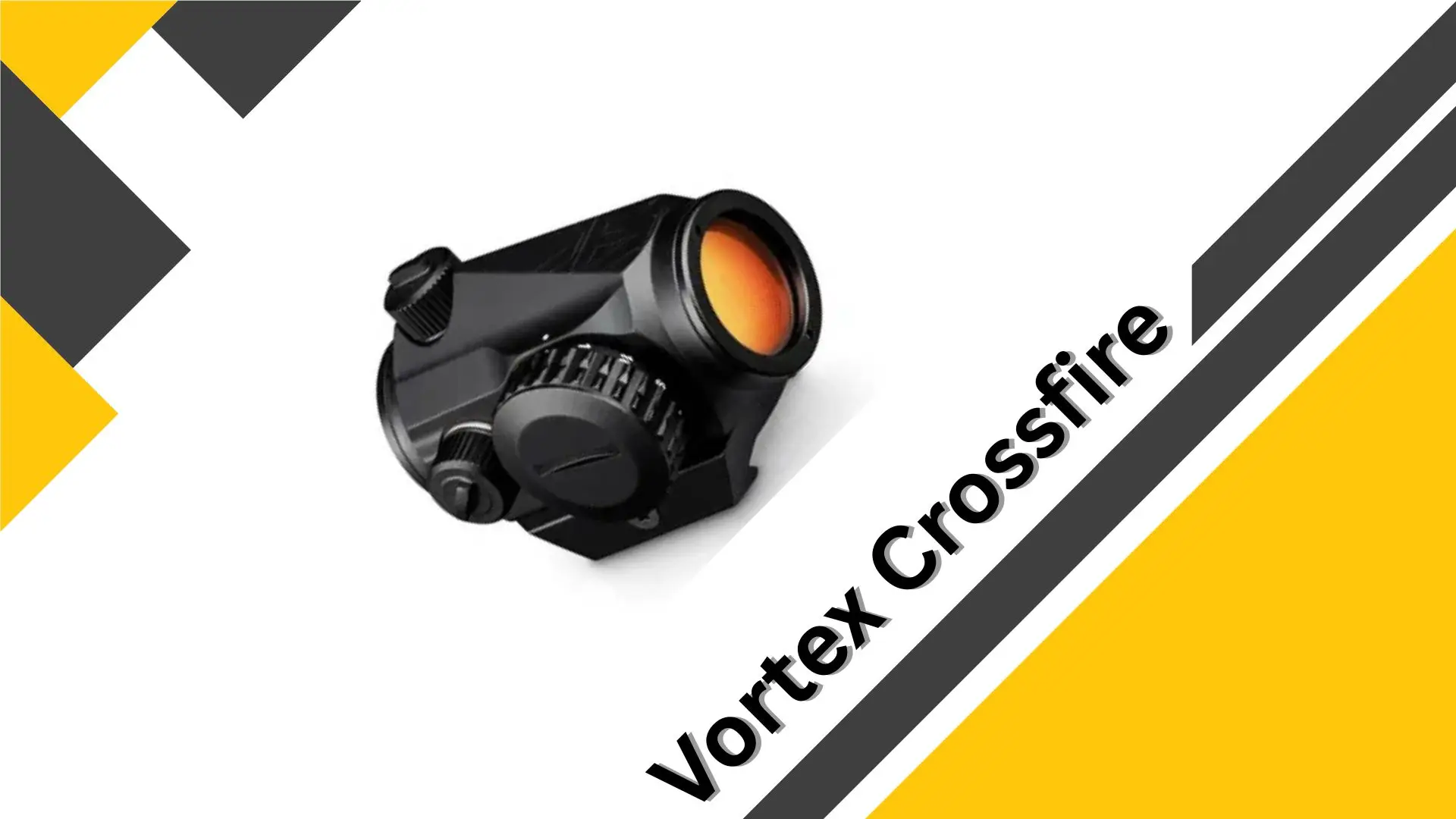
Vortex Crossfire

Reading Time: 10 mins 31 sec

The Vortex Crossfire Red Dot sits in a perfect spot in today’s optics market. You’re paying an entry-level price but getting features that perform way above what you’d expect.

This guide shows you which generation you should buy. It also tells you if the 50,000-hour battery life actually works in real shooting conditions.

You’ll see how this optic performs on different firearms. By the end, you’ll know if the Crossfire fits your needs or if you should shop around.

Highlights

  • Gen II (CF-RD2) delivers 50,000-hour battery life but requires manual on/off operation.
  • Street price $150 – $180 includes both mounts and Vortex’s unlimited lifetime warranty.
  • Ideal for recreational AR-15s, shotguns, and rimfire rifles—not for professional duty use.
  • Holds zero reliably with waterproof/fogproof construction and side-loading battery.

Understanding the Vortex Crossfire Red Dot Family

CF-RD1 vs CF-RD2: Which Generation Should You Buy?

The Vortex Crossfire II naming creates confusion in the market. Here’s what actually matters: Vortex released two generations—the CF-RD1 (Gen I) and CF-RD2 (Gen II).

Gen I offered 7,000 hours of battery life on brightness setting 5. Gen II leaped to 50,000 hours on setting 6—a seven-fold improvement that also added two night vision compatible brightness settings at the lowest levels.

Despite these upgrades, Vortex maintained the $219.99 MSRP. You’ll find street prices between $150 – $180 for the Gen II model today.

If you’re shopping now, focus exclusively on the CF-RD2. The battery life difference alone makes the Gen I obsolete for new purchases.

Key Technical Specifications

The 2 MOA dot gives you a good balance of speed and precision. It’s fast to pick up at close range and still fine enough for careful shots at 100 yards.

You get unlimited eye relief with this optic. Your head position is much more forgiving than with a scope, as long as your eye stays inside the viewing window.

The viewing window is about 20 mm, and the sight weighs only 5.2 ounces. That keeps your rifle or shotgun from feeling front-heavy.

Each adjustment click moves the point of impact by 1 MOA. You get 100 MOA of total travel for both elevation and windage, which is plenty for zeroing out to 100 yards.

The housing is made from aluminum and is both nitrogen purged and O-ring sealed. That gives you waterproof and fogproof performance in normal field use.

Vortex doesn’t list a specific IP rating for this red dot. Still, many shooters have reported it surviving short periods of full submersion without issues.

Battery Life and Power Management

Does the 50,000-hour claim hold up?

In real life, most shooters don’t leave a red dot sight on 24/7. But long-term use and testing show that the battery life is very close to what the spec promises.

The sight runs on a CR2032 battery. It sits in a side-loading compartment that’s built into the brightness knob. Because the battery loads from the side, you don’t have to remove the optic from your firearm. That helps you keep your zero when you swap batteries.

There’s one trade-off you need to know. The Crossfire doesn’t have any auto-off or motion-activation feature.

That means you have to remember to turn it off after each range session or dry-fire practice. If you forget, you’ll waste battery life even with the strong runtime rating.

Other red dots, especially from brands like Holosun, use motion-sensing “shake-awake” technology. Those optics turn on when you move the gun and go to sleep when it sits still.

The Gen II Crossfire also adds two night vision–compatible brightness settings at levels 1 and 2. If you don’t use night vision gear, those two levels won’t really matter for you.

Mounting Options and Co-Witness Configurations

Your Crossfire comes with two mounts in the box. You get a low mount and a higher mount that gives you a lower 1/3 co‑witness.

Lower 1/3 co‑witness puts the red dot just above your iron sights. This setup works especially well on AR‑15s with flip-up or fixed backup sights. With this height, you can keep a more natural, upright head position. Your irons stay there as a backup without cluttering the center of your view.

The low mount sits the optic closer to the rail. It’s a good choice for firearms without iron sights or when you want the lowest possible profile.

Both included mounts use a skeletonized design to shave weight. You still get a solid, stable base that holds zero under normal recoil.

Vortex also includes a T‑10 Torx wrench in the package. You can use it to install the mount and secure the optic.

To mount the sight, first pick the height that fits your gun and shooting style. Set the mount on the rail, line it up with the slots, and snug the screws down evenly. Tighten each screw a bit at a time, moving back and forth between them. That even pressure helps the mount seat squarely and stay put.

The Crossfire is mainly designed as a stand‑alone red dot. Some shooters find that pairing it with a magnifier can make the sight picture and parallax feel less forgiving compared to optics built for magnifier use. If you plan to run a magnifier often, you may want to look at red dots that are marketed specifically for that role.

Real-World Performance by Firearm Platform

Crossfire on AR-15 Platforms

Your AR‑15 is one of the best hosts for the Crossfire. The optic easily handles 5.56/.223 recoil without losing zero, even over long-range sessions.

Inside 0–25 yards, the sight really shines. The 2 MOA dot is fast to pick up and lets you drive the gun quickly in close quarters. At 50 yards, that same dot is still small enough for steady torso hits. You can run drills, transitions, and rapid strings without feeling like the dot is covering too much of the target.

The included lower 1/3 co‑witness mount works very well with standard AR‑15 iron sights. Your red dot sits slightly above the irons, so you get a clean, uncluttered sight picture. If the optic ever fails, you just drop your head a bit and use the irons through the window.

For professional roles, you need to think more carefully. Law enforcement and military users usually want optics that are either always on or have some kind of auto‑on feature. The Crossfire is fully manual, so you have to remember to turn it on before things go bad. That extra step can become a real weak point in a true high‑stress defensive or duty scenario.

Crossfire on Shotguns and Rimfire Rifles

The Crossfire works very well on 12‑gauge shotguns. It can handle everything from slugs to buckshot without losing zero.

Turkey hunters get a big benefit from the fast, bright dot. When a tom finally steps into range, you can pick up the sight picture quickly and break the shot with confidence.

The Crossfire also pairs naturally with .22 LR rimfire rifles. It gives you a simple, clear aiming point for plinking, small game, or steel. The value side really stands out in this role—you’re putting an optic in the roughly $150 range on a rimfire rifle that often costs around a few hundred dollars.

Optical Quality and Durability

Lens Quality and Dot Characteristics

The Crossfire uses fully multi‑coated lenses to boost light transmission. You get solid edge‑to‑edge clarity for an optic in this price range.

Color looks natural through the glass. Most shooters only notice a slight tint, if any, compared to other budget red dots.

The 2 MOA dot is built to look round and clean under normal use. In good lighting and at reasonable brightness levels, it gives you a clear aiming point.

How sharp the dot looks still depends a lot on your eyes. Brightness level, lighting, and vision issues can all change how the dot appears.

If you have astigmatism, any red dot can look smeared, fuzzy, or shaped like a star. Using prescription shooting glasses or trying a green dot version can sometimes make the dot look clearer.

Build Quality and Weather Resistance

The Crossfire uses an aluminum housing with a hard‑anodized finish. That gives you solid durability and good resistance to scratches and corrosion. At about 5.2 ounces and roughly 2.5 inches long, it stays compact and light.

Vortex nitrogen purges the inside of the optic and seals it with O‑rings. This setup helps keep moisture out and prevents internal fogging in normal weather changes.

Shooters have also pushed the Crossfire in water tests. Many report that their sights kept working after full submersion, with the illumination still on and no fogging inside once they were dried off.

Zeroing and Adjustments

You can plan on using around 20–30 rounds to lock in a solid zero at 25 yards. The exact number depends on your rifle, ammo, and how tight you want your groups.

The turret caps do double duty as adjustment tools. You can use their edges to turn the windage and elevation screws, so you don’t need to carry a separate screwdriver.

For an entry‑level optic, the Crossfire holds zero very well. Many shooters run it through hundreds of rounds and multiple trips to the range without seeing their point of impact wander.

The side‑loading battery design also helps protect your zero. Since you don’t have to remove the optic to change the battery, you’re much less likely to bump it out of alignment.

Vortex VIP Warranty

The Vortex VIP (Very Important Promise) warranty is one of the biggest selling points of the Crossfire. It’s a lifetime warranty that covers most damage and defects with no time limit.

You normally don’t need a receipt, proof of purchase, or any kind of registration to get help. If the optic is a genuine Vortex product, they’ll usually take care of you.

The warranty also follows the optic, not the buyer. If you pick up a used Crossfire or get one as a gift, the coverage still applies.

When something goes wrong, Vortex will either repair the optic or replace it, at their discretion. In most cases, you’re not paying for parts or labor.

Many shooters say the claim process is simple and fast. Turnaround is often in the range of a couple of weeks after the company receives your sight, though that can change with workload and shipping.

Budget‑friendly optics like the Crossfire can have more variation in durability than high‑end duty glass. That’s where the VIP warranty becomes a big safety net for your wallet.

It doesn’t cover everything, like loss, theft, or intentional abuse. But for normal use, it takes most of the financial fear out of running an entry‑level optic hard.

Price-to-Performance Analysis

Street prices for the Crossfire Gen II usually land in the mid‑$100 range, often around $150, even though the MSRP sits at $219.99. That puts it firmly in the budget‑friendly bracket while still feeling like a serious optic.

In the box, you get both mount heights, a CR2032 battery, lens caps, a T‑10 Torx wrench, and the user manual. For most shooters, that means you don’t need to buy extra mounting hardware just to get up and running.

Competitor Comparisons

  • Sig Sauer Romeo 5 ($120 – $150): Offers MOTAC auto-on technology and similar glass quality but only 5-year warranty. Choose this if auto-on convenience outweighs warranty protection.
  • Holosun HS403B ($150 – $180): Features shake-awake technology and solar failsafe backup power. Best choice if you want advanced power management without manual operation.
  • Bushnell TRS-25 ($50 – $80): Ultra-budget option with significant durability and feature compromises. The $70 – $100 price difference proves worthwhile for the reliability upgrade.

The total cost of ownership over five years runs approximately $160 – $180, including initial purchase and battery replacements. No additional mount purchases are necessary since both heights ship in the package.

Ideal Use Cases

Perfect For

If you’re a budget‑conscious recreational shooter, the Crossfire fits you well. You get a quality optic without paying premium optic money.

Weekend range trips and casual target sessions don’t really demand a $500 red dot. The Crossfire gives you reliable performance at an entry‑level price.

Hunters running AR‑15s, shotguns, or rimfire rifles also get a lot of value here. The bright 2 MOA dot makes it easy to pick up targets quickly in low morning or evening light.

The Crossfire is also a strong match for home‑defense backup rifles. You get a tough, simple sight on a gun that may sit more than it’s shot, but still has to work when you need it.

If you’re buying your first red dot, this optic keeps things simple. You don’t have to sort through a bunch of advanced modes, and the VIP warranty adds peace of mind if something goes wrong.

NOT Recommended For

Professional duty guns have different demands. If you’re in law enforcement, military, or private security and need an always‑ready rifle, a manual‑only optic like the Crossfire is usually not the best primary choice. In high‑stress situations, having to remember to turn the sight on is a real risk.

Serious competition shooters should also think twice. Many competitors prefer red dots with bigger windows, faster controls, and extra features to shave tenths of a second. The Crossfire’s relatively stiff brightness dial can slow you down when you need quick changes between stages.

For long‑range precision work, you’ll be better served with magnified glass. Even a 2 MOA dot will cover a lot of target at extended distances, making fine holds harder.

If you know you won’t be disciplined about turning a sight on and off, look at motion‑activated or always‑on options instead.

Conclusion

The Vortex Crossfire Red Dot demonstrates that smart engineering and honest pricing can deliver genuine value. The 50,000-hour battery life, unlimited warranty coverage, and proven durability create a compelling package for recreational shooters and hunters working within realistic budgets.

Yes, you’ll need to remember manual activation every time. Yes, the brightness dial resists gloved operation by design.

But you’ll also never worry about warranty claims, and you’ll trust the optic to maintain zero across thousands of rounds.

If you want to explore other red dot sights, you can browse our catalog. You can also call us at 713-485-5773.

Disclaimer

Product Information & Safety Notice: The information provided in this guide serves educational and informational purposes only. Product specifications, pricing, and availability change without notice by manufacturers. Always verify current specifications with Vortex Optics or authorized dealers before purchase.

Firearms Safety: Red dot sights are firearm accessories intended for use by responsible, trained individuals. Always follow fundamental firearms safety rules: treat every firearm as loaded, never point at anything you don’t intend to shoot, keep your finger off the trigger until ready to fire, and be certain of your target and what’s beyond it. Ensure you comply with all federal, state, and local laws regarding firearm ownership, transportation, and use.

Optical Sight Limitations: No optical sight should be solely relied upon for critical defensive applications without backup iron sights and extensive training. Electronic optics can fail due to battery depletion, damage, or environmental factors. Practice extensively with your optic and develop proficiency with backup sighting systems.

Installation & Mounting: Improper installation can result in optic failure, loss of zero, or firearm damage. Follow manufacturer instructions precisely, use proper torque specifications, and verify secure mounting before live fire. If uncertain about installation, seek assistance from qualified gunsmiths or firearms professionals.

Individual Results May Vary: Shooting performance, optical clarity perception, and user experience vary significantly based on individual physiology, shooting skill level, ammunition quality, firearm condition, and environmental factors. What works optimally for one shooter may not suit another.

Warranty Disclaimer: While this guide discusses Vortex’s VIP Warranty, warranty terms and conditions are subject to Vortex Optics’ policies and may change. Always review current warranty terms directly with Vortex before purchase. This guide is not affiliated with or endorsed by Vortex Optics.

By using the information in this guide, you acknowledge these disclaimers and assume full responsibility for your equipment choices, installation, use, and safety practices.

Comments

Leave a Reply

Your email address will not be published. Required fields are marked *

Vortex Crossfire Red Dot: Complete Buyer’s Guide

Vortex Crossfire

Reading Time: 10 mins 31 sec

The Vortex Crossfire Red Dot sits in a perfect spot in today’s optics market. You’re paying an entry-level price but getting features that perform way above what you’d expect.

This guide shows you which generation you should buy. It also tells you if the 50,000-hour battery life actually works in real shooting conditions.

You’ll see how this optic performs on different firearms. By the end, you’ll know if the Crossfire fits your needs or if you should shop around.

Highlights

  • Gen II (CF-RD2) delivers 50,000-hour battery life but requires manual on/off operation.
  • Street price $150 – $180 includes both mounts and Vortex’s unlimited lifetime warranty.
  • Ideal for recreational AR-15s, shotguns, and rimfire rifles—not for professional duty use.
  • Holds zero reliably with waterproof/fogproof construction and side-loading battery.

Understanding the Vortex Crossfire Red Dot Family

CF-RD1 vs CF-RD2: Which Generation Should You Buy?

The Vortex Crossfire II naming creates confusion in the market. Here’s what actually matters: Vortex released two generations—the CF-RD1 (Gen I) and CF-RD2 (Gen II).

Gen I offered 7,000 hours of battery life on brightness setting 5. Gen II leaped to 50,000 hours on setting 6—a seven-fold improvement that also added two night vision compatible brightness settings at the lowest levels.

Despite these upgrades, Vortex maintained the $219.99 MSRP. You’ll find street prices between $150 – $180 for the Gen II model today.

If you’re shopping now, focus exclusively on the CF-RD2. The battery life difference alone makes the Gen I obsolete for new purchases.

Key Technical Specifications

The 2 MOA dot gives you a good balance of speed and precision. It’s fast to pick up at close range and still fine enough for careful shots at 100 yards.

You get unlimited eye relief with this optic. Your head position is much more forgiving than with a scope, as long as your eye stays inside the viewing window.

The viewing window is about 20 mm, and the sight weighs only 5.2 ounces. That keeps your rifle or shotgun from feeling front-heavy.

Each adjustment click moves the point of impact by 1 MOA. You get 100 MOA of total travel for both elevation and windage, which is plenty for zeroing out to 100 yards.

The housing is made from aluminum and is both nitrogen purged and O-ring sealed. That gives you waterproof and fogproof performance in normal field use.

Vortex doesn’t list a specific IP rating for this red dot. Still, many shooters have reported it surviving short periods of full submersion without issues.

Battery Life and Power Management

Does the 50,000-hour claim hold up?

In real life, most shooters don’t leave a red dot sight on 24/7. But long-term use and testing show that the battery life is very close to what the spec promises.

The sight runs on a CR2032 battery. It sits in a side-loading compartment that’s built into the brightness knob. Because the battery loads from the side, you don’t have to remove the optic from your firearm. That helps you keep your zero when you swap batteries.

There’s one trade-off you need to know. The Crossfire doesn’t have any auto-off or motion-activation feature.

That means you have to remember to turn it off after each range session or dry-fire practice. If you forget, you’ll waste battery life even with the strong runtime rating.

Other red dots, especially from brands like Holosun, use motion-sensing “shake-awake” technology. Those optics turn on when you move the gun and go to sleep when it sits still.

The Gen II Crossfire also adds two night vision–compatible brightness settings at levels 1 and 2. If you don’t use night vision gear, those two levels won’t really matter for you.

Mounting Options and Co-Witness Configurations

Your Crossfire comes with two mounts in the box. You get a low mount and a higher mount that gives you a lower 1/3 co‑witness.

Lower 1/3 co‑witness puts the red dot just above your iron sights. This setup works especially well on AR‑15s with flip-up or fixed backup sights. With this height, you can keep a more natural, upright head position. Your irons stay there as a backup without cluttering the center of your view.

The low mount sits the optic closer to the rail. It’s a good choice for firearms without iron sights or when you want the lowest possible profile.

Both included mounts use a skeletonized design to shave weight. You still get a solid, stable base that holds zero under normal recoil.

Vortex also includes a T‑10 Torx wrench in the package. You can use it to install the mount and secure the optic.

To mount the sight, first pick the height that fits your gun and shooting style. Set the mount on the rail, line it up with the slots, and snug the screws down evenly. Tighten each screw a bit at a time, moving back and forth between them. That even pressure helps the mount seat squarely and stay put.

The Crossfire is mainly designed as a stand‑alone red dot. Some shooters find that pairing it with a magnifier can make the sight picture and parallax feel less forgiving compared to optics built for magnifier use. If you plan to run a magnifier often, you may want to look at red dots that are marketed specifically for that role.

Real-World Performance by Firearm Platform

Crossfire on AR-15 Platforms

Your AR‑15 is one of the best hosts for the Crossfire. The optic easily handles 5.56/.223 recoil without losing zero, even over long-range sessions.

Inside 0–25 yards, the sight really shines. The 2 MOA dot is fast to pick up and lets you drive the gun quickly in close quarters. At 50 yards, that same dot is still small enough for steady torso hits. You can run drills, transitions, and rapid strings without feeling like the dot is covering too much of the target.

The included lower 1/3 co‑witness mount works very well with standard AR‑15 iron sights. Your red dot sits slightly above the irons, so you get a clean, uncluttered sight picture. If the optic ever fails, you just drop your head a bit and use the irons through the window.

For professional roles, you need to think more carefully. Law enforcement and military users usually want optics that are either always on or have some kind of auto‑on feature. The Crossfire is fully manual, so you have to remember to turn it on before things go bad. That extra step can become a real weak point in a true high‑stress defensive or duty scenario.

Crossfire on Shotguns and Rimfire Rifles

The Crossfire works very well on 12‑gauge shotguns. It can handle everything from slugs to buckshot without losing zero.

Turkey hunters get a big benefit from the fast, bright dot. When a tom finally steps into range, you can pick up the sight picture quickly and break the shot with confidence.

The Crossfire also pairs naturally with .22 LR rimfire rifles. It gives you a simple, clear aiming point for plinking, small game, or steel. The value side really stands out in this role—you’re putting an optic in the roughly $150 range on a rimfire rifle that often costs around a few hundred dollars.

Optical Quality and Durability

Lens Quality and Dot Characteristics

The Crossfire uses fully multi‑coated lenses to boost light transmission. You get solid edge‑to‑edge clarity for an optic in this price range.

Color looks natural through the glass. Most shooters only notice a slight tint, if any, compared to other budget red dots.

The 2 MOA dot is built to look round and clean under normal use. In good lighting and at reasonable brightness levels, it gives you a clear aiming point.

How sharp the dot looks still depends a lot on your eyes. Brightness level, lighting, and vision issues can all change how the dot appears.

If you have astigmatism, any red dot can look smeared, fuzzy, or shaped like a star. Using prescription shooting glasses or trying a green dot version can sometimes make the dot look clearer.

Build Quality and Weather Resistance

The Crossfire uses an aluminum housing with a hard‑anodized finish. That gives you solid durability and good resistance to scratches and corrosion. At about 5.2 ounces and roughly 2.5 inches long, it stays compact and light.

Vortex nitrogen purges the inside of the optic and seals it with O‑rings. This setup helps keep moisture out and prevents internal fogging in normal weather changes.

Shooters have also pushed the Crossfire in water tests. Many report that their sights kept working after full submersion, with the illumination still on and no fogging inside once they were dried off.

Zeroing and Adjustments

You can plan on using around 20–30 rounds to lock in a solid zero at 25 yards. The exact number depends on your rifle, ammo, and how tight you want your groups.

The turret caps do double duty as adjustment tools. You can use their edges to turn the windage and elevation screws, so you don’t need to carry a separate screwdriver.

For an entry‑level optic, the Crossfire holds zero very well. Many shooters run it through hundreds of rounds and multiple trips to the range without seeing their point of impact wander.

The side‑loading battery design also helps protect your zero. Since you don’t have to remove the optic to change the battery, you’re much less likely to bump it out of alignment.

Vortex VIP Warranty

The Vortex VIP (Very Important Promise) warranty is one of the biggest selling points of the Crossfire. It’s a lifetime warranty that covers most damage and defects with no time limit.

You normally don’t need a receipt, proof of purchase, or any kind of registration to get help. If the optic is a genuine Vortex product, they’ll usually take care of you.

The warranty also follows the optic, not the buyer. If you pick up a used Crossfire or get one as a gift, the coverage still applies.

When something goes wrong, Vortex will either repair the optic or replace it, at their discretion. In most cases, you’re not paying for parts or labor.

Many shooters say the claim process is simple and fast. Turnaround is often in the range of a couple of weeks after the company receives your sight, though that can change with workload and shipping.

Budget‑friendly optics like the Crossfire can have more variation in durability than high‑end duty glass. That’s where the VIP warranty becomes a big safety net for your wallet.

It doesn’t cover everything, like loss, theft, or intentional abuse. But for normal use, it takes most of the financial fear out of running an entry‑level optic hard.

Price-to-Performance Analysis

Street prices for the Crossfire Gen II usually land in the mid‑$100 range, often around $150, even though the MSRP sits at $219.99. That puts it firmly in the budget‑friendly bracket while still feeling like a serious optic.

In the box, you get both mount heights, a CR2032 battery, lens caps, a T‑10 Torx wrench, and the user manual. For most shooters, that means you don’t need to buy extra mounting hardware just to get up and running.

Competitor Comparisons

  • Sig Sauer Romeo 5 ($120 – $150): Offers MOTAC auto-on technology and similar glass quality but only 5-year warranty. Choose this if auto-on convenience outweighs warranty protection.
  • Holosun HS403B ($150 – $180): Features shake-awake technology and solar failsafe backup power. Best choice if you want advanced power management without manual operation.
  • Bushnell TRS-25 ($50 – $80): Ultra-budget option with significant durability and feature compromises. The $70 – $100 price difference proves worthwhile for the reliability upgrade.

The total cost of ownership over five years runs approximately $160 – $180, including initial purchase and battery replacements. No additional mount purchases are necessary since both heights ship in the package.

Ideal Use Cases

Perfect For

If you’re a budget‑conscious recreational shooter, the Crossfire fits you well. You get a quality optic without paying premium optic money.

Weekend range trips and casual target sessions don’t really demand a $500 red dot. The Crossfire gives you reliable performance at an entry‑level price.

Hunters running AR‑15s, shotguns, or rimfire rifles also get a lot of value here. The bright 2 MOA dot makes it easy to pick up targets quickly in low morning or evening light.

The Crossfire is also a strong match for home‑defense backup rifles. You get a tough, simple sight on a gun that may sit more than it’s shot, but still has to work when you need it.

If you’re buying your first red dot, this optic keeps things simple. You don’t have to sort through a bunch of advanced modes, and the VIP warranty adds peace of mind if something goes wrong.

NOT Recommended For

Professional duty guns have different demands. If you’re in law enforcement, military, or private security and need an always‑ready rifle, a manual‑only optic like the Crossfire is usually not the best primary choice. In high‑stress situations, having to remember to turn the sight on is a real risk.

Serious competition shooters should also think twice. Many competitors prefer red dots with bigger windows, faster controls, and extra features to shave tenths of a second. The Crossfire’s relatively stiff brightness dial can slow you down when you need quick changes between stages.

For long‑range precision work, you’ll be better served with magnified glass. Even a 2 MOA dot will cover a lot of target at extended distances, making fine holds harder.

If you know you won’t be disciplined about turning a sight on and off, look at motion‑activated or always‑on options instead.

Conclusion

The Vortex Crossfire Red Dot demonstrates that smart engineering and honest pricing can deliver genuine value. The 50,000-hour battery life, unlimited warranty coverage, and proven durability create a compelling package for recreational shooters and hunters working within realistic budgets.

Yes, you’ll need to remember manual activation every time. Yes, the brightness dial resists gloved operation by design.

But you’ll also never worry about warranty claims, and you’ll trust the optic to maintain zero across thousands of rounds.

If you want to explore other red dot sights, you can browse our catalog. You can also call us at 713-485-5773.

Disclaimer

Product Information & Safety Notice: The information provided in this guide serves educational and informational purposes only. Product specifications, pricing, and availability change without notice by manufacturers. Always verify current specifications with Vortex Optics or authorized dealers before purchase.

Firearms Safety: Red dot sights are firearm accessories intended for use by responsible, trained individuals. Always follow fundamental firearms safety rules: treat every firearm as loaded, never point at anything you don’t intend to shoot, keep your finger off the trigger until ready to fire, and be certain of your target and what’s beyond it. Ensure you comply with all federal, state, and local laws regarding firearm ownership, transportation, and use.

Optical Sight Limitations: No optical sight should be solely relied upon for critical defensive applications without backup iron sights and extensive training. Electronic optics can fail due to battery depletion, damage, or environmental factors. Practice extensively with your optic and develop proficiency with backup sighting systems.

Installation & Mounting: Improper installation can result in optic failure, loss of zero, or firearm damage. Follow manufacturer instructions precisely, use proper torque specifications, and verify secure mounting before live fire. If uncertain about installation, seek assistance from qualified gunsmiths or firearms professionals.

Individual Results May Vary: Shooting performance, optical clarity perception, and user experience vary significantly based on individual physiology, shooting skill level, ammunition quality, firearm condition, and environmental factors. What works optimally for one shooter may not suit another.

Warranty Disclaimer: While this guide discusses Vortex’s VIP Warranty, warranty terms and conditions are subject to Vortex Optics’ policies and may change. Always review current warranty terms directly with Vortex before purchase. This guide is not affiliated with or endorsed by Vortex Optics.

By using the information in this guide, you acknowledge these disclaimers and assume full responsibility for your equipment choices, installation, use, and safety practices.

Leave a Reply

Your email address will not be published. Required fields are marked *

Shopping cart0
There are no products in the cart!