
Micro Red Dot Sights: The Compact Optic That Punches Way Above Its Weight

Published on: May 11, 2026
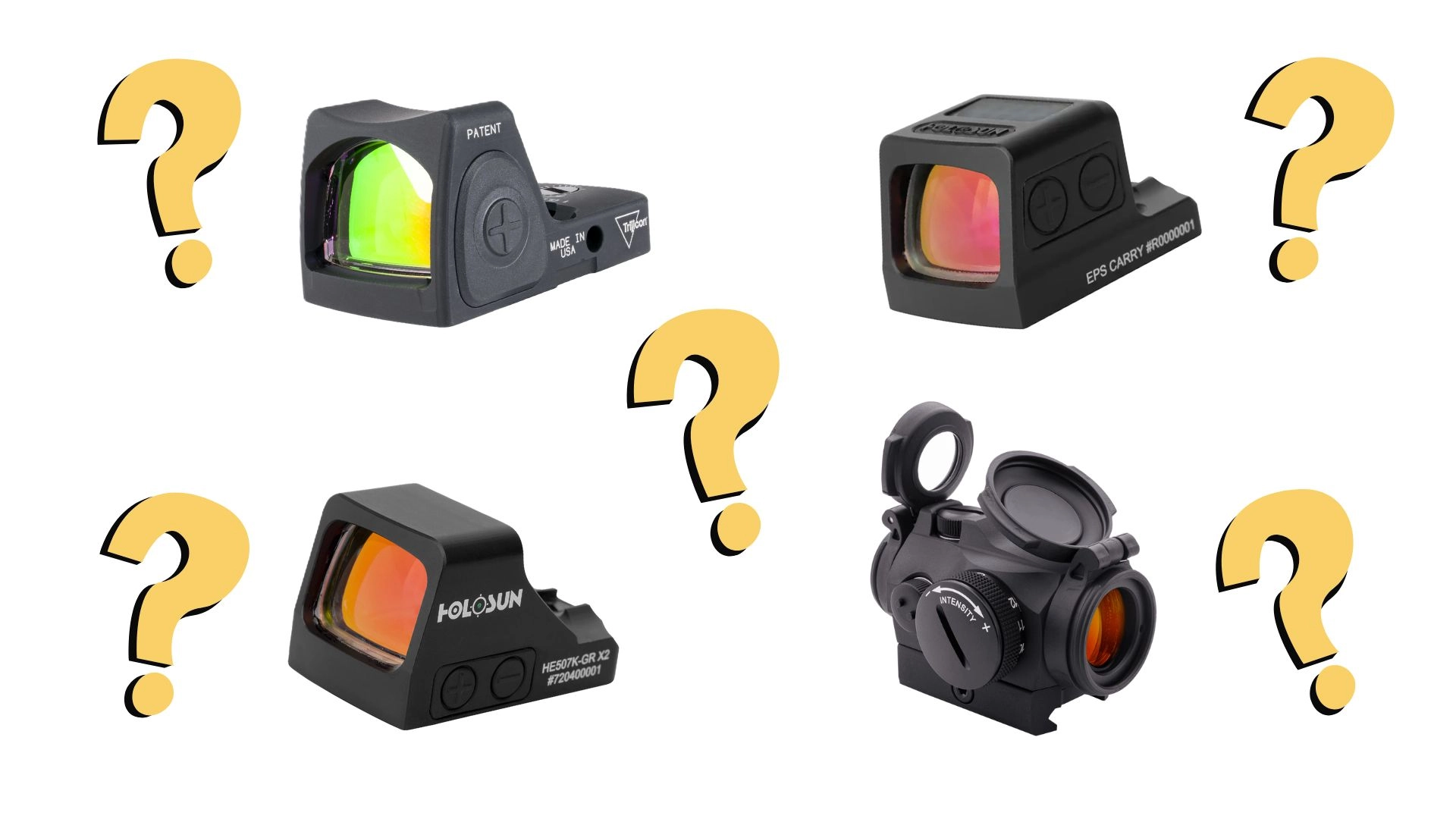
Micro Red Dot Sights: The Compact Optic That Punches Way Above Its Weight

Reading time: 9 mins 14 sec

If you’re curious about micro red dot sights and are shopping for the best pistol red dot, the core promise is simple: fast target acquisition in a compact, lightweight package. And yes—the right one absolutely delivers. But with dozens of options across different price points, footprints, and features, knowing which one fits your setup makes all the difference.

This guide covers everything you need—specs that actually matter, footprint compatibility, top picks by use case, and how to keep your optic ready. Want to understand how these optics work at a foundational level first? Check out our guide on how red dot sights work.

Highlights

  • A micro red dot sight has no universal definition—most fall under 20mm lens diameter, though 25mm options are often included.
  • Dot size (MOA), window size, battery life, and footprint are four of the most important specs to consider.
  • Footprint compatibility is the most overlooked purchase decision—get it wrong and the optic won’t mount.
  • U.S. Special Operations Command (USSOCOM) selected the Trijicon RMR Type 2 as its official handgun reflex sight—real-world proof that small doesn’t mean weak.
  • Open‑emitter and enclosed‑emitter designs serve different needs—understanding the difference can help you avoid compatibility issues and unnecessary spending.

What Is a Micro Red Dot Sight?

The term micro red dot sight doesn’t have one official industry definition. Generally, it refers to any red dot with a lens around 20mm or smaller—though some manufacturers include 25mm optics in this category, too. Anything 30mm and above is typically considered full-size.

You’ll also see terms like compact red dot, small red dot, and mini red dot used interchangeably in product listings. These are marketing labels, not technical standards. Always check the actual dimensions before buying.

Compared to full-size optics, micro red dots are lighter, lower-profile, and built with a smaller footprint—and they come in two main types: open‑emitter (reflex) designs and enclosed‑emitter designs, a distinction that matters more than most buyers realize.

Don’t let the size fool you. U.S. Special Operations Command chose the Trijicon RMR Type 2—a micro red dot—as its official Handgun Reflex Sight after extensive competitive testing. Small doesn’t mean weak at all.

Key Performance Specs That Actually Matter

MOA Dot Size: Precision vs. Speed

MOA stands for Minute of Angle. At 100 yards, 1 MOA equals approximately 1.047 inches—rounded to 1 inch for everyday use. Here’s how the three most common sizes break down:

  • 2 MOA—Best for precision shooting and longer distances. The smaller dot doesn’t obscure your target.
  • 3–3.5 MOA—The balanced option for defensive use. Fast enough to grab under stress, precise enough for accurate shots.
  • 6 MOA—Best for close-quarters scenarios where you need instant acquisition on the draw.

One thing many buyers miss: when you add a magnifier behind a red dot, the dot appears larger—not smaller. A 2 MOA dot behind a 3x magnifier effectively appears as a 6 MOA dot at your eye. Factor that in if you’re building a multi-optic setup.

In direct sunlight, weaker sights wash out. High max brightness is a real-world performance factor—not just a number on a spec sheet—especially for outdoor and duty carry.

Glass Quality and Window Size

Here’s an honest trade-off: a smaller footprint means a smaller window, and a smaller window means slightly slower dot acquisition. That’s just physics.

What separates good glass from cheap glass is multi-coating (which reduces tint and glare), minimal edge distortion, and a clean sight picture with no color shift. These are the qualities that justify a higher price tag.

Window size matters most on the draw stroke. A wider window—like the large angular lens on the Leupold DeltaPoint Pro—helps your eye find the dot faster when you present the gun. K-series optics built for subcompact pistols (the Holosun 507K’s window measures 0.58″ x 0.77″) have smaller windows as a necessary trade-off for their footprint. That works fine at defensive distances—just know what you’re signing up for before you buy.

Battery Life: The Spec That Separates Tiers

Here’s a simple way to think about battery life by optic category:

  • Holographic sights (e.g., EOTech): roughly 300–1,000 hours on typical batteries—measured in months, not years.
  • Entry-level red dots: roughly 1,000–10,000 hours
  • Premium red dots (e.g., Holosun, Aimpoint): 20,000–50,000+ hours

Every time you remove a slide-mounted optic to swap a battery, you risk losing zero. A side-loading battery tray—like on the Holosun 507K X2—lets you swap without pulling the sight off the slide, so your zero stays right where you left it. That’s a real operational advantage, not a minor convenience.

Some Holosun models (like the 507C) include a Solar Failsafe that uses ambient light as a backup power source. The 507K X2 does not include this feature—don’t assume all Holosun models are identical.

Shake Awake (motion-activated illumination) powers off the LED when your gun isn’t moving and brings it back the moment it does. For a carry gun that sits holstered most of the day, that kind of power management makes a real difference in long-term battery life.

Durability: What the Housing Material Tells You

The housing material is one of the clearest signals of where an optic sits in the quality hierarchy:

  • 6061 aluminum—Standard grade, found in most budget options
  • 7075 aluminum—Aircraft-grade, stronger and lighter; used in the Holosun 507K X2 and Trijicon RMR Type 2
  • Titanium—Ultra-premium; used in elite models like the Holosun HE509T titanium variant

Look for at least IP67 waterproofing—that’s the standard set by the International Electrotechnical Commission (IEC) for fully dust-tight protection and submersion tolerance to 1 meter for 30 minutes. Enclosed‑emitter designs are generally tougher due to their sealed housing, but they carry a weight penalty. The Aimpoint ACRO P-2 weighs 2.1 oz versus 1.2 oz for the Trijicon RMR Type 2—a real-world difference you’ll feel on a carry pistol worn all day.

Footprint Compatibility: The Most Overlooked Decision

A footprint is the specific mounting hole pattern your optic uses to attach to a slide or rail. Buy the wrong footprint and the optic won’t mount without an adapter plate. This is the most common—and most avoidable—buying mistake in the micro red dot market.

Here are the main footprints you’ll encounter:

  • RMR footprint—The industry standard, supported by Glock MOS, S&W M&P, and the widest range of factory optics-ready slides
  • K-series footprint (Holosun)—A modified version of the Shield RMSc, designed for subcompact pistols like the Sig P365. Similar to RMSc but not identical—the 507K X2 mounts directly to P365 slides but requires an adapter plate for Glock 43X MOS slides
  • Leupold DeltaPoint Pro footprint—Larger window, popular in competition shooting
  • Aimpoint ACRO footprint—The enclosed-emitter standard, growing in duty-use adoption

Always verify your pistol’s specific optic cut before purchasing. “RMSc-compatible” and “K-series” are not interchangeable—don’t assume they are.

Adapter Plates and Holster Fit

When your pistol’s cut doesn’t match your sight’s footprint, you’ll need an adapter plate. Look for steel over aluminum, solid screw engagement depth, and a flush fit against the slide. Factory polymer plates—such as the Glock MOS plate, often cited as a weak point in this area—can flex under recoil and shift your zero over time. Aftermarket steel plates are worth the upgrade if you’re building a carry or duty setup.

One more thing once you’ve mounted a red dot: your standard holster won’t fit anymore. You’ll need an optic-compatible holster with a specific cutout for your sight model. Also check whether your micro dot co-witnesses with your iron sights—not all designs do at standard mounting height. Suppressor-height irons solve this by sitting tall enough to appear in the lower third of the optic window as a backup aiming system.

Open Emitter vs. Enclosed Emitter

Open Emitter

Open-emitter designs have an exposed LED that projects onto a single partially reflective lens. Well-known examples include the Trijicon RMR, Holosun 507K, and SIG Romeo Zero.

They’re lighter, more compact, more affordable, and easier to clean. The trade-off is a vulnerable emitter—rain, mud, or debris can block the dot if it gets between the LED and the lens. For inside-the-waistband carry where the optic stays protected most of the time, this risk is genuinely low and the size advantage is real.

Enclosed Emitter

Enclosed-emitter designs fully seal the LED inside a housing with two lenses, meaning nothing can get between the emitter and the glass. Key examples: Aimpoint ACRO P-2, Holosun HE509T, SIG Romeo2, and Vortex Defender-CCW.

The emitter is completely protected—wipe the lens clean and you’re back in action, no matter what you’ve dragged the gun through. The trade-off is added weight and cost. For duty use, outdoor carry, or any environment where reliability is non-negotiable, the enclosed design is the right call.

Top Picks by Use Case

  • Concealed carry on subcompact pistols: The Holosun 507K X2 is the benchmark in this category—1 oz, a 50,000-hour battery (dot-only, setting 6) on a single CR1632, IP67, K-series footprint, side-loading battery tray, and a Multi-Reticle System giving you a 2 MOA dot, a 32 MOA circle, or both. For enclosed-emitter protection on a carry setup, the Vortex Defender-CCW is the go-to.
  • Full-size duty and defensive pistols: The Trijicon RMR Type 2 is the proven standard—USSOCOM chose it through competitive testing that’s about as rigorous as real-world validation gets. Battery life runs up to 4 years at setting 4 of 8, according to Trijicon’s own specifications. For enclosed-emitter performance on a full-size platform, the Aimpoint ACRO P-2 delivers 50,000 hours of battery life on a single CR2032 in a fully sealed housing.
  • Rifles and carbines: The Aimpoint Micro T-2 is the benchmark here—50,000 hours of constant-on battery life on a single CR2032, a 2 MOA dot, and glass quality that was built to serve military and law enforcement professionals worldwide. Aimpoint has supplied over 2 million red dot sights to the U.S. military since 1997—the T-2 is very much part of that legacy. K-series and RMR-footprint micro dots also make excellent 45-degree offset sights alongside a primary magnified optic for fast CQB transitions.
  • Budget shooters: The Primary Arms Classic Series Micro offers a lifetime warranty and solid glass clarity for range and training use. It lacks Shake Awake and requires tools for zero adjustments—perfectly acceptable as a training optic, but not the right choice for a life-safety carry gun.

Zeroing and Maintenance

Zero It Right

Zeroing a pistol-mounted red dot is straightforward if you follow the right sequence:

  1. Mount and torque correctly—torque specs vary by manufacturer and model, so always check your specific manual before tightening. Use thread-locking compound where the manufacturer specifies it.
  2. Start at 10–15 yards. Fire a 3-shot group and note where the group lands relative to your point of aim.
  3. Adjust windage and elevation using the manufacturer’s MOA-per-click value—many quality optics, including the Holosun 507K X2 and Trijicon RMR Type 2, use 1 MOA per click.
  4. Confirm your zero at your practical distance. For most EDC setups, 15 yards is a good benchmark.
  5. Verify your iron sights still co-witness as a fallback.

Keep It Ready

Consistent maintenance keeps a good optic reliable:

  • Clean the lens with a soft microfiber cloth only—abrasive materials will scratch the coatings and degrade your sight picture over time.
  • Check torque every 200–500 rounds. Recoil gradually works mounting screws loose, and a loose optic shifts zero.
  • Swap the battery annually on any carry optic, regardless of how much charge it shows. Battery ratings are tested in controlled conditions—annual replacement is cheap insurance.
  • Re-check zero after any battery swap that requires removing the optic from the slide, like with the Trijicon RMR.
  • Inspect O-rings on enclosed emitter designs—a cracked or deformed seal compromises your weather protection entirely.

Common Questions About Micro Red Dots

Will a micro red dot hold zero through thousands of rounds?

Yes—if it’s quality-built and properly mounted with thread-locking compound at the manufacturer’s specified torque. Budget optics are more likely to exhibit zero shift because they’re not engineered to handle the repeated recoil forces of a cycling pistol slide. That’s one of the clearest arguments for not cutting corners on a carry optic.

Do I need to remove my iron sights?

It depends on your pistol. Some guns—like the Sig P365XL—remove the rear iron sight when you pull the optic cover plate. Suppressor-height iron sights solve this by sitting tall enough to provide a backup sight picture in the lower third of the optic window, so you’re never completely without a backup aiming system.

Is a micro red dot worth it for concealed carry?

Yes, with one honest caveat: it’s a skill, not a plug-and-play upgrade. At defensive distances (3–15 yards), a red dot gives you a single point of focus and the ability to keep both eyes open—advantages that iron sights simply can’t match. The key is putting in range time to build muscle memory, so the optic works for you under pressure.

What’s the difference between a micro red dot and a holographic sight?

A red dot uses an LED to project a dot onto a partially reflective lens. A holographic sight uses a laser to illuminate a recorded hologram built into the glass—the reticle appears to float at the target plane rather than on the lens surface. Holographics run 300–1,000 hours of battery versus 20,000–50,000+ for premium red dots, and they’re generally too bulky for pistol-sized micro applications. Red dots dominate here for good reason.

Conclusion

Choosing the right micro red dot sight comes down to matching the optic to your actual mission. Footprint compatibility determines whether it physically fits. Emitter type determines how it handles your environment. Battery life and access design determine whether it’ll be ready when you need it. And dot size determines whether you’re optimized for speed, precision, or both.

The right compact red dot on the right platform—properly zeroed and maintained—will outperform iron sights at defensive distances. That’s not marketing. It’s why the world’s most demanding military and law enforcement users have made slide-mounted micro red dots the standard.

Ready to find yours? Browse Gold Trigger’s selection of micro red dot sights and get the right optic for your gun. You may also call us at 713-485-5773.

Disclaimer: The content in this article is for informational and educational purposes only. Always comply with all applicable federal, state, and local laws regarding the purchase, possession, and use of firearms and firearm accessories. Improper installation—including incorrect torque, missing thread-locking compound, or incompatible mounting—can result in equipment failure and potential safety hazards. Always follow the manufacturer’s installation instructions or consult a qualified gunsmith. Performance data reflects manufacturer specifications; individual results will vary. Firearm handling should always be performed by trained individuals following established safety protocols.

Comments

Leave a Reply

Your email address will not be published. Required fields are marked *

Micro Red Dot Sights: The Compact Optic That Punches Way Above Its Weight

Micro Red Dot Sights: The Compact Optic That Punches Way Above Its Weight

Reading time: 9 mins 14 sec

If you’re curious about micro red dot sights and are shopping for the best pistol red dot, the core promise is simple: fast target acquisition in a compact, lightweight package. And yes—the right one absolutely delivers. But with dozens of options across different price points, footprints, and features, knowing which one fits your setup makes all the difference.

This guide covers everything you need—specs that actually matter, footprint compatibility, top picks by use case, and how to keep your optic ready. Want to understand how these optics work at a foundational level first? Check out our guide on how red dot sights work.

Highlights

  • A micro red dot sight has no universal definition—most fall under 20mm lens diameter, though 25mm options are often included.
  • Dot size (MOA), window size, battery life, and footprint are four of the most important specs to consider.
  • Footprint compatibility is the most overlooked purchase decision—get it wrong and the optic won’t mount.
  • U.S. Special Operations Command (USSOCOM) selected the Trijicon RMR Type 2 as its official handgun reflex sight—real-world proof that small doesn’t mean weak.
  • Open‑emitter and enclosed‑emitter designs serve different needs—understanding the difference can help you avoid compatibility issues and unnecessary spending.

What Is a Micro Red Dot Sight?

The term micro red dot sight doesn’t have one official industry definition. Generally, it refers to any red dot with a lens around 20mm or smaller—though some manufacturers include 25mm optics in this category, too. Anything 30mm and above is typically considered full-size.

You’ll also see terms like compact red dot, small red dot, and mini red dot used interchangeably in product listings. These are marketing labels, not technical standards. Always check the actual dimensions before buying.

Compared to full-size optics, micro red dots are lighter, lower-profile, and built with a smaller footprint—and they come in two main types: open‑emitter (reflex) designs and enclosed‑emitter designs, a distinction that matters more than most buyers realize.

Don’t let the size fool you. U.S. Special Operations Command chose the Trijicon RMR Type 2—a micro red dot—as its official Handgun Reflex Sight after extensive competitive testing. Small doesn’t mean weak at all.

Key Performance Specs That Actually Matter

MOA Dot Size: Precision vs. Speed

MOA stands for Minute of Angle. At 100 yards, 1 MOA equals approximately 1.047 inches—rounded to 1 inch for everyday use. Here’s how the three most common sizes break down:

  • 2 MOA—Best for precision shooting and longer distances. The smaller dot doesn’t obscure your target.
  • 3–3.5 MOA—The balanced option for defensive use. Fast enough to grab under stress, precise enough for accurate shots.
  • 6 MOA—Best for close-quarters scenarios where you need instant acquisition on the draw.

One thing many buyers miss: when you add a magnifier behind a red dot, the dot appears larger—not smaller. A 2 MOA dot behind a 3x magnifier effectively appears as a 6 MOA dot at your eye. Factor that in if you’re building a multi-optic setup.

In direct sunlight, weaker sights wash out. High max brightness is a real-world performance factor—not just a number on a spec sheet—especially for outdoor and duty carry.

Glass Quality and Window Size

Here’s an honest trade-off: a smaller footprint means a smaller window, and a smaller window means slightly slower dot acquisition. That’s just physics.

What separates good glass from cheap glass is multi-coating (which reduces tint and glare), minimal edge distortion, and a clean sight picture with no color shift. These are the qualities that justify a higher price tag.

Window size matters most on the draw stroke. A wider window—like the large angular lens on the Leupold DeltaPoint Pro—helps your eye find the dot faster when you present the gun. K-series optics built for subcompact pistols (the Holosun 507K’s window measures 0.58″ x 0.77″) have smaller windows as a necessary trade-off for their footprint. That works fine at defensive distances—just know what you’re signing up for before you buy.

Battery Life: The Spec That Separates Tiers

Here’s a simple way to think about battery life by optic category:

  • Holographic sights (e.g., EOTech): roughly 300–1,000 hours on typical batteries—measured in months, not years.
  • Entry-level red dots: roughly 1,000–10,000 hours
  • Premium red dots (e.g., Holosun, Aimpoint): 20,000–50,000+ hours

Every time you remove a slide-mounted optic to swap a battery, you risk losing zero. A side-loading battery tray—like on the Holosun 507K X2—lets you swap without pulling the sight off the slide, so your zero stays right where you left it. That’s a real operational advantage, not a minor convenience.

Some Holosun models (like the 507C) include a Solar Failsafe that uses ambient light as a backup power source. The 507K X2 does not include this feature—don’t assume all Holosun models are identical.

Shake Awake (motion-activated illumination) powers off the LED when your gun isn’t moving and brings it back the moment it does. For a carry gun that sits holstered most of the day, that kind of power management makes a real difference in long-term battery life.

Durability: What the Housing Material Tells You

The housing material is one of the clearest signals of where an optic sits in the quality hierarchy:

  • 6061 aluminum—Standard grade, found in most budget options
  • 7075 aluminum—Aircraft-grade, stronger and lighter; used in the Holosun 507K X2 and Trijicon RMR Type 2
  • Titanium—Ultra-premium; used in elite models like the Holosun HE509T titanium variant

Look for at least IP67 waterproofing—that’s the standard set by the International Electrotechnical Commission (IEC) for fully dust-tight protection and submersion tolerance to 1 meter for 30 minutes. Enclosed‑emitter designs are generally tougher due to their sealed housing, but they carry a weight penalty. The Aimpoint ACRO P-2 weighs 2.1 oz versus 1.2 oz for the Trijicon RMR Type 2—a real-world difference you’ll feel on a carry pistol worn all day.

Footprint Compatibility: The Most Overlooked Decision

A footprint is the specific mounting hole pattern your optic uses to attach to a slide or rail. Buy the wrong footprint and the optic won’t mount without an adapter plate. This is the most common—and most avoidable—buying mistake in the micro red dot market.

Here are the main footprints you’ll encounter:

  • RMR footprint—The industry standard, supported by Glock MOS, S&W M&P, and the widest range of factory optics-ready slides
  • K-series footprint (Holosun)—A modified version of the Shield RMSc, designed for subcompact pistols like the Sig P365. Similar to RMSc but not identical—the 507K X2 mounts directly to P365 slides but requires an adapter plate for Glock 43X MOS slides
  • Leupold DeltaPoint Pro footprint—Larger window, popular in competition shooting
  • Aimpoint ACRO footprint—The enclosed-emitter standard, growing in duty-use adoption

Always verify your pistol’s specific optic cut before purchasing. “RMSc-compatible” and “K-series” are not interchangeable—don’t assume they are.

Adapter Plates and Holster Fit

When your pistol’s cut doesn’t match your sight’s footprint, you’ll need an adapter plate. Look for steel over aluminum, solid screw engagement depth, and a flush fit against the slide. Factory polymer plates—such as the Glock MOS plate, often cited as a weak point in this area—can flex under recoil and shift your zero over time. Aftermarket steel plates are worth the upgrade if you’re building a carry or duty setup.

One more thing once you’ve mounted a red dot: your standard holster won’t fit anymore. You’ll need an optic-compatible holster with a specific cutout for your sight model. Also check whether your micro dot co-witnesses with your iron sights—not all designs do at standard mounting height. Suppressor-height irons solve this by sitting tall enough to appear in the lower third of the optic window as a backup aiming system.

Open Emitter vs. Enclosed Emitter

Open Emitter

Open-emitter designs have an exposed LED that projects onto a single partially reflective lens. Well-known examples include the Trijicon RMR, Holosun 507K, and SIG Romeo Zero.

They’re lighter, more compact, more affordable, and easier to clean. The trade-off is a vulnerable emitter—rain, mud, or debris can block the dot if it gets between the LED and the lens. For inside-the-waistband carry where the optic stays protected most of the time, this risk is genuinely low and the size advantage is real.

Enclosed Emitter

Enclosed-emitter designs fully seal the LED inside a housing with two lenses, meaning nothing can get between the emitter and the glass. Key examples: Aimpoint ACRO P-2, Holosun HE509T, SIG Romeo2, and Vortex Defender-CCW.

The emitter is completely protected—wipe the lens clean and you’re back in action, no matter what you’ve dragged the gun through. The trade-off is added weight and cost. For duty use, outdoor carry, or any environment where reliability is non-negotiable, the enclosed design is the right call.

Top Picks by Use Case

  • Concealed carry on subcompact pistols: The Holosun 507K X2 is the benchmark in this category—1 oz, a 50,000-hour battery (dot-only, setting 6) on a single CR1632, IP67, K-series footprint, side-loading battery tray, and a Multi-Reticle System giving you a 2 MOA dot, a 32 MOA circle, or both. For enclosed-emitter protection on a carry setup, the Vortex Defender-CCW is the go-to.
  • Full-size duty and defensive pistols: The Trijicon RMR Type 2 is the proven standard—USSOCOM chose it through competitive testing that’s about as rigorous as real-world validation gets. Battery life runs up to 4 years at setting 4 of 8, according to Trijicon’s own specifications. For enclosed-emitter performance on a full-size platform, the Aimpoint ACRO P-2 delivers 50,000 hours of battery life on a single CR2032 in a fully sealed housing.
  • Rifles and carbines: The Aimpoint Micro T-2 is the benchmark here—50,000 hours of constant-on battery life on a single CR2032, a 2 MOA dot, and glass quality that was built to serve military and law enforcement professionals worldwide. Aimpoint has supplied over 2 million red dot sights to the U.S. military since 1997—the T-2 is very much part of that legacy. K-series and RMR-footprint micro dots also make excellent 45-degree offset sights alongside a primary magnified optic for fast CQB transitions.
  • Budget shooters: The Primary Arms Classic Series Micro offers a lifetime warranty and solid glass clarity for range and training use. It lacks Shake Awake and requires tools for zero adjustments—perfectly acceptable as a training optic, but not the right choice for a life-safety carry gun.

Zeroing and Maintenance

Zero It Right

Zeroing a pistol-mounted red dot is straightforward if you follow the right sequence:

  1. Mount and torque correctly—torque specs vary by manufacturer and model, so always check your specific manual before tightening. Use thread-locking compound where the manufacturer specifies it.
  2. Start at 10–15 yards. Fire a 3-shot group and note where the group lands relative to your point of aim.
  3. Adjust windage and elevation using the manufacturer’s MOA-per-click value—many quality optics, including the Holosun 507K X2 and Trijicon RMR Type 2, use 1 MOA per click.
  4. Confirm your zero at your practical distance. For most EDC setups, 15 yards is a good benchmark.
  5. Verify your iron sights still co-witness as a fallback.

Keep It Ready

Consistent maintenance keeps a good optic reliable:

  • Clean the lens with a soft microfiber cloth only—abrasive materials will scratch the coatings and degrade your sight picture over time.
  • Check torque every 200–500 rounds. Recoil gradually works mounting screws loose, and a loose optic shifts zero.
  • Swap the battery annually on any carry optic, regardless of how much charge it shows. Battery ratings are tested in controlled conditions—annual replacement is cheap insurance.
  • Re-check zero after any battery swap that requires removing the optic from the slide, like with the Trijicon RMR.
  • Inspect O-rings on enclosed emitter designs—a cracked or deformed seal compromises your weather protection entirely.

Common Questions About Micro Red Dots

Will a micro red dot hold zero through thousands of rounds?

Yes—if it’s quality-built and properly mounted with thread-locking compound at the manufacturer’s specified torque. Budget optics are more likely to exhibit zero shift because they’re not engineered to handle the repeated recoil forces of a cycling pistol slide. That’s one of the clearest arguments for not cutting corners on a carry optic.

Do I need to remove my iron sights?

It depends on your pistol. Some guns—like the Sig P365XL—remove the rear iron sight when you pull the optic cover plate. Suppressor-height iron sights solve this by sitting tall enough to provide a backup sight picture in the lower third of the optic window, so you’re never completely without a backup aiming system.

Is a micro red dot worth it for concealed carry?

Yes, with one honest caveat: it’s a skill, not a plug-and-play upgrade. At defensive distances (3–15 yards), a red dot gives you a single point of focus and the ability to keep both eyes open—advantages that iron sights simply can’t match. The key is putting in range time to build muscle memory, so the optic works for you under pressure.

What’s the difference between a micro red dot and a holographic sight?

A red dot uses an LED to project a dot onto a partially reflective lens. A holographic sight uses a laser to illuminate a recorded hologram built into the glass—the reticle appears to float at the target plane rather than on the lens surface. Holographics run 300–1,000 hours of battery versus 20,000–50,000+ for premium red dots, and they’re generally too bulky for pistol-sized micro applications. Red dots dominate here for good reason.

Conclusion

Choosing the right micro red dot sight comes down to matching the optic to your actual mission. Footprint compatibility determines whether it physically fits. Emitter type determines how it handles your environment. Battery life and access design determine whether it’ll be ready when you need it. And dot size determines whether you’re optimized for speed, precision, or both.

The right compact red dot on the right platform—properly zeroed and maintained—will outperform iron sights at defensive distances. That’s not marketing. It’s why the world’s most demanding military and law enforcement users have made slide-mounted micro red dots the standard.

Ready to find yours? Browse Gold Trigger’s selection of micro red dot sights and get the right optic for your gun. You may also call us at 713-485-5773.

Disclaimer: The content in this article is for informational and educational purposes only. Always comply with all applicable federal, state, and local laws regarding the purchase, possession, and use of firearms and firearm accessories. Improper installation—including incorrect torque, missing thread-locking compound, or incompatible mounting—can result in equipment failure and potential safety hazards. Always follow the manufacturer’s installation instructions or consult a qualified gunsmith. Performance data reflects manufacturer specifications; individual results will vary. Firearm handling should always be performed by trained individuals following established safety protocols.

Leave a Reply

Your email address will not be published. Required fields are marked *

Shopping cart0
There are no products in the cart!