
Vortex Defender CCW: Complete Guide

Published on: February 23, 2026
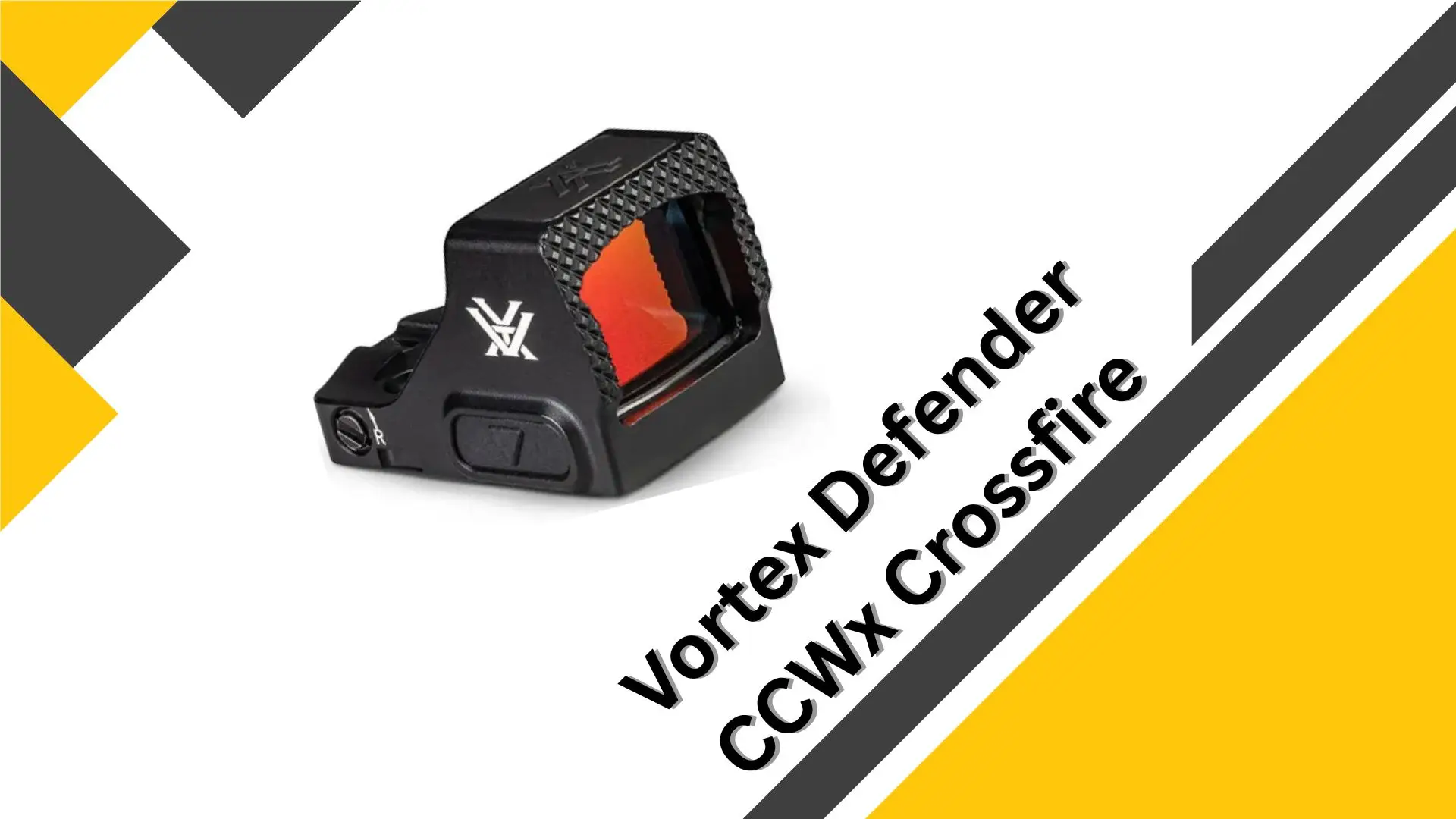
Vortex Defender CCW

Reading Time: 6 mins 38 sec

The Vortex Defender CCW is one of the most popular micro red dots for concealed carry. Since its release in 2023, many everyday carriers have started trusting it on their pistols.

There are two different Vortex Defender CCW models, and they aren’t built for the same type of use.

If you choose the wrong one, you may lose performance when it matters most. This guide walks you through everything step by step, so you can pick the right option for your carry pistol with confidence.

Highlights

  • Two Defender CCW models exist, and they serve different carry needs.
  • Open emitter is lighter; enclosed solar is more weatherproof.
  • Uses Shield RMSc footprint for popular carry pistols.
  • Battery life ranges from one year to several years.
  • Built from 7075 aluminum with a lifetime warranty.

Understanding the Two Defender CCW Versions

Vortex first released the open emitter Vortex Defender CCW in March 2023. In September 2025, they followed it with the enclosed solar version.

These two optics are built for different types of carry. You’ll choose between them based on what matters most to you when carrying every day.

The open emitter model weighs just 0.95 ounces and has a $349 MSRP. That lightweight design makes it one of the lightest micro red dots you can put on a carry pistol.

The Vortex Defender CCW enclosed model weighs 1.3 ounces and lists at $399 MSRP. It adds a little weight in exchange for better weather protection and built-in solar charging.

Open vs. Enclosed Emitter Design

Open emitter red dots leave the LED exposed to the environment. This helps keep weight low, but rain or debris can interfere with the dot when you need it most.

The enclosed version fully seals the emitter inside the housing. Water, snow, sweat, and pocket lint stay out, which matters for daily carry in changing weather.

If you carry in humid areas, the enclosed design helps prevent condensation on the emitter. For range-only use, the open emitter works well and keeps your setup lighter.

The enclosed model also sits slightly taller on your slide. Before buying, make sure your holster can fit the added height without issues.

The Vortex Defender CCW Footprint

The Vortex Defender CCW uses the Shield RMSc standard, which is the most common mounting pattern for micro red dots. Pistols like the Sig P365, Springfield Hellcat, or Glock 43X MOS can accept this optic directly, no adapter plates needed.

Vortex includes multiple screw sets for Sig Sauer, Glock MOS, FN 509, H&K VP9, and Smith & Wesson M&P pistols. There’s also a 1-degree shim plate that lets you adjust your zero for different distances without maxing out elevation.

If your pistol doesn’t have factory optic cuts, you’ll need a mounting plate to convert your slide to the RMSc pattern.

What Battery Does the Vortex Defender CCW Use?

The open emitter Vortex Defender CCW runs on a CR1632 battery, which you can access from the top without removing the optic. The enclosed solar version uses a CR2032, loaded from the right side.

At medium brightness, the open emitter lasts about 9,500 hours—roughly a year with daily carry. The enclosed solar model gives 35,000 hours on battery alone, or up to 150,000 hours with solar charging.

In real-world use, you’ll likely change the open emitter battery every 6–9 months. The enclosed solar battery can go 3–5 years before needing replacement.

Both models include motion activation with a 10-minute auto-shutoff. Your optic wakes as soon as you move your gun and powers down when it’s stationary.

How to Turn Off Vortex Defender CCW Manually

Turning off your Vortex Defender CCW manually takes just three seconds. Simply hold both brightness buttons at the same time. This is useful when you’re storing your carry gun for long periods.

You can also use the same method to completely disable motion activation if you prefer full manual control. The button-lock feature keeps you from accidentally changing brightness while drawing from your holster.

7075 Aluminum Construction

Vortex built the Defender CCW from 7075 aluminum instead of the more common 6061-T6 alloy. This makes it stronger and more impact-resistant. They even tested it over 15 times, dropping a mounted Glock 19 from six feet onto concrete.

A ShockShield polymer insert on top absorbs impacts and protects the internal electronics. The Fast-Rack texturing helps you rack your slide one-handed and ensures the optic seats properly.

The open emitter has an IPX7 rating, meaning it’s submersible to one meter for 30 minutes. Independent tests even showed it survived 24 hours underwater with no issues. The enclosed solar version’s sealed housing gives even better protection against moisture.

Reticle Options and Brightness

The open emitter comes with a single dot, either 3 MOA or 6 MOA, which you pick when buying. The enclosed solar model gives you multiple reticle options: a 3 MOA dot, a 32 MOA circle, or both together.

Most defensive shooters prefer the 6 MOA dot for quick target acquisition under stress. Competition shooters often choose the 3 MOA dot for precision. The circle reticle also helps you acquire targets faster in low-light conditions.

The open emitter has 10 brightness settings—8 for daylight and 2 for night vision. The enclosed solar offers 12 settings with the same split. Neither model has auto-brightness, so you manually set the intensity for consistent performance.

Proper Mounting and Zeroing

Before installing your optic, clean the slide’s mounting surface with isopropyl alcohol. Apply blue Loctite—not red—to the mounting screws to keep everything secure.

Here are simple installation steps:

  • Select the correct screw length, apply Loctite, and hand-tighten in a cross pattern.
  • Torque the screws to 1.8 Nm (15 inch-pounds), then let them cure for 24 hours before firing.

Start your zero at 10 yards for concealed carry. Each click moves the dot 1 MOA, which equals about 0.3 inches at that distance.

Fire a three-shot group, measure how far you’re off, and make small corrections. Confirm your zero once the group centers.

After that, verify your zero at 7, 15, and 25 yards.

Understanding how red dot sights work at different distances helps you avoid surprises in defensive situations.

Durability Testing Results

Independent tests put the Vortex Defender CCW through tough conditions. It survived drops from chest height onto concrete, 24-hour water submersion, and more than 40,000 rounds—all while holding zero.

Recoil testing with 9mm, .40 S&W, and .45 ACP showed no screw loosening when the screws were properly torqued.

The open emitter can struggle in heavy rain, causing the dot to split during wet conditions. The enclosed solar model fixes this issue completely, keeping your reticle clear in all weather.

Holosun 507K Comparison and Warranty

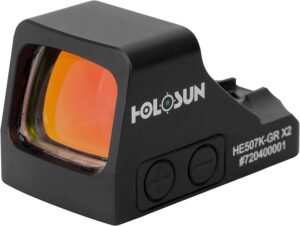
The Holosun 507K X2 offers 50,000-hour battery life versus the open Defender’s 9,500 hours. However, the 507K has three-year warranty with receipt required—the Defender CCW includes unlimited lifetime VIP warranty.
Vortex’s VIP warranty covers repair or replacement for life. No receipt required, no warranty card, no questions asked. This transfers to subsequent owners and covers normal wear, accidental damage, and user error.

Holster Compatibility and Maintenance

The open emitter measures 1.59 inches long and weighs 0.95 ounces, so most Shield RMSc holsters fit it without changes. The enclosed solar version stands 1.1 inches tall and may need spacers for form-fitted holsters.

Always test fit your holster before carrying to make sure the optic sits completely and without gaps. If you carry appendix, enclosed models might need a small cant angle adjustment.

For maintenance, wipe your lenses after every range session and check screw tightness every 500 rounds. Replace open emitter batteries about once a year, and enclosed solar batteries every 2–3 years.

Common Issues and Solutions

  • Dot Won’t Turn On: Remove and reseat the battery, making sure the positive side is up.
  • Inconsistent Brightness: Clean the battery contacts with isopropyl alcohol.
  • Zero Won’t Hold: Check your screw torque and make sure you’re using the correct screw length.
  • Blurry Dot: This often points to astigmatism—rotate the optic 90 degrees to see if the problem is the sight or your eye.
  • Holster Won’t Fit: The enclosed model may need spacers due to its height—check with your holster manufacturer.

Choosing the Right Model

Pick the open emitter if you want the lightest carry for summer and fitted clothing. Choose the enclosed solar for duty use, outdoor carry, or humid conditions where weather protection matters.

Competition shooters like the open emitter for its lighter weight, while home defense setups benefit from the enclosed solar’s set-and-forget reliability with solar charging.

Avoid common installation mistakes: Skipping thread locker can shift your zero after 100–200 rounds, overtightening can create stress fractures, and rushing Loctite curing may cause problems after your first magazine.

Pricing and Light Pairings

The open emitter has an MSRP of $349.99, with street prices usually around $200–250. The enclosed solar lists at $399.99, with street prices near $300–350.

If you’re pairing a weapon light with your optic, weight balance matters. Just like choosing between the SureFire M600 and M640, the total accessory weight can affect how comfortable your carry feels throughout the day.

Conclusion

The Vortex Defender CCW gives pro-level performance at a good price. Open emitter is best for light summer carry, while enclosed solar is ideal for duty or harsh conditions.

Its Shield RMSc footprint, mounting hardware, 7075 aluminum build, and lifetime VIP warranty make it extremely durable. The transferable warranty adds long-term value.

If you’re ready to upgrade your carry setup, Gold Trigger offers a wide selection of proven red dots to fit different pistols and carry needs. Our team can help you choose the right optic and confirm compatibility before you buy.

Disclaimer: This guide is for educational and informational purposes only and is based on research, manufacturer details, and publicly available information. No hands-on testing was performed.

This guide does not replace professional gunsmithing services or formal firearms training. If you’re uncertain about any aspect of optic installation, zeroing, or use, consult a qualified gunsmith or certified firearms instructor. Always observe fundamental firearm safety rules: treat every firearm as if it’s loaded, never point a firearm at anything you’re not willing to destroy, keep your finger off the trigger until ready to fire, and be certain of your target and what lies beyond it.

Gold Trigger assumes no liability for accidents, injuries, or damages resulting from the use or misuse of information contained in this guide. Users assume all risks associated with firearm ownership, modification, and use. Red dot sights are tools that require training and practice to use effectively. Defensive shooting situations require split-second decisions under extreme stress—regular training is essential.

By using this information, you acknowledge that you’re solely responsible for your own safety and the safety of others. You agree to comply with all applicable laws and regulations regarding firearms ownership, modification, and use in your jurisdiction.

Comments

Leave a Reply

Your email address will not be published. Required fields are marked *

Vortex Defender CCW: Complete Guide

Vortex Defender CCW

Reading Time: 6 mins 38 sec

The Vortex Defender CCW is one of the most popular micro red dots for concealed carry. Since its release in 2023, many everyday carriers have started trusting it on their pistols.

There are two different Vortex Defender CCW models, and they aren’t built for the same type of use.

If you choose the wrong one, you may lose performance when it matters most. This guide walks you through everything step by step, so you can pick the right option for your carry pistol with confidence.

Highlights

  • Two Defender CCW models exist, and they serve different carry needs.
  • Open emitter is lighter; enclosed solar is more weatherproof.
  • Uses Shield RMSc footprint for popular carry pistols.
  • Battery life ranges from one year to several years.
  • Built from 7075 aluminum with a lifetime warranty.

Understanding the Two Defender CCW Versions

Vortex first released the open emitter Vortex Defender CCW in March 2023. In September 2025, they followed it with the enclosed solar version.

These two optics are built for different types of carry. You’ll choose between them based on what matters most to you when carrying every day.

The open emitter model weighs just 0.95 ounces and has a $349 MSRP. That lightweight design makes it one of the lightest micro red dots you can put on a carry pistol.

The Vortex Defender CCW enclosed model weighs 1.3 ounces and lists at $399 MSRP. It adds a little weight in exchange for better weather protection and built-in solar charging.

Open vs. Enclosed Emitter Design

Open emitter red dots leave the LED exposed to the environment. This helps keep weight low, but rain or debris can interfere with the dot when you need it most.

The enclosed version fully seals the emitter inside the housing. Water, snow, sweat, and pocket lint stay out, which matters for daily carry in changing weather.

If you carry in humid areas, the enclosed design helps prevent condensation on the emitter. For range-only use, the open emitter works well and keeps your setup lighter.

The enclosed model also sits slightly taller on your slide. Before buying, make sure your holster can fit the added height without issues.

The Vortex Defender CCW Footprint

The Vortex Defender CCW uses the Shield RMSc standard, which is the most common mounting pattern for micro red dots. Pistols like the Sig P365, Springfield Hellcat, or Glock 43X MOS can accept this optic directly, no adapter plates needed.

Vortex includes multiple screw sets for Sig Sauer, Glock MOS, FN 509, H&K VP9, and Smith & Wesson M&P pistols. There’s also a 1-degree shim plate that lets you adjust your zero for different distances without maxing out elevation.

If your pistol doesn’t have factory optic cuts, you’ll need a mounting plate to convert your slide to the RMSc pattern.

What Battery Does the Vortex Defender CCW Use?

The open emitter Vortex Defender CCW runs on a CR1632 battery, which you can access from the top without removing the optic. The enclosed solar version uses a CR2032, loaded from the right side.

At medium brightness, the open emitter lasts about 9,500 hours—roughly a year with daily carry. The enclosed solar model gives 35,000 hours on battery alone, or up to 150,000 hours with solar charging.

In real-world use, you’ll likely change the open emitter battery every 6–9 months. The enclosed solar battery can go 3–5 years before needing replacement.

Both models include motion activation with a 10-minute auto-shutoff. Your optic wakes as soon as you move your gun and powers down when it’s stationary.

How to Turn Off Vortex Defender CCW Manually

Turning off your Vortex Defender CCW manually takes just three seconds. Simply hold both brightness buttons at the same time. This is useful when you’re storing your carry gun for long periods.

You can also use the same method to completely disable motion activation if you prefer full manual control. The button-lock feature keeps you from accidentally changing brightness while drawing from your holster.

7075 Aluminum Construction

Vortex built the Defender CCW from 7075 aluminum instead of the more common 6061-T6 alloy. This makes it stronger and more impact-resistant. They even tested it over 15 times, dropping a mounted Glock 19 from six feet onto concrete.

A ShockShield polymer insert on top absorbs impacts and protects the internal electronics. The Fast-Rack texturing helps you rack your slide one-handed and ensures the optic seats properly.

The open emitter has an IPX7 rating, meaning it’s submersible to one meter for 30 minutes. Independent tests even showed it survived 24 hours underwater with no issues. The enclosed solar version’s sealed housing gives even better protection against moisture.

Reticle Options and Brightness

The open emitter comes with a single dot, either 3 MOA or 6 MOA, which you pick when buying. The enclosed solar model gives you multiple reticle options: a 3 MOA dot, a 32 MOA circle, or both together.

Most defensive shooters prefer the 6 MOA dot for quick target acquisition under stress. Competition shooters often choose the 3 MOA dot for precision. The circle reticle also helps you acquire targets faster in low-light conditions.

The open emitter has 10 brightness settings—8 for daylight and 2 for night vision. The enclosed solar offers 12 settings with the same split. Neither model has auto-brightness, so you manually set the intensity for consistent performance.

Proper Mounting and Zeroing

Before installing your optic, clean the slide’s mounting surface with isopropyl alcohol. Apply blue Loctite—not red—to the mounting screws to keep everything secure.

Here are simple installation steps:

  • Select the correct screw length, apply Loctite, and hand-tighten in a cross pattern.
  • Torque the screws to 1.8 Nm (15 inch-pounds), then let them cure for 24 hours before firing.

Start your zero at 10 yards for concealed carry. Each click moves the dot 1 MOA, which equals about 0.3 inches at that distance.

Fire a three-shot group, measure how far you’re off, and make small corrections. Confirm your zero once the group centers.

After that, verify your zero at 7, 15, and 25 yards.

Understanding how red dot sights work at different distances helps you avoid surprises in defensive situations.

Durability Testing Results

Independent tests put the Vortex Defender CCW through tough conditions. It survived drops from chest height onto concrete, 24-hour water submersion, and more than 40,000 rounds—all while holding zero.

Recoil testing with 9mm, .40 S&W, and .45 ACP showed no screw loosening when the screws were properly torqued.

The open emitter can struggle in heavy rain, causing the dot to split during wet conditions. The enclosed solar model fixes this issue completely, keeping your reticle clear in all weather.

Holosun 507K Comparison and Warranty

The Holosun 507K X2 offers 50,000-hour battery life versus the open Defender’s 9,500 hours. However, the 507K has three-year warranty with receipt required—the Defender CCW includes unlimited lifetime VIP warranty.

Vortex’s VIP warranty covers repair or replacement for life. No receipt required, no warranty card, no questions asked. This transfers to subsequent owners and covers normal wear, accidental damage, and user error.

Holster Compatibility and Maintenance

The open emitter measures 1.59 inches long and weighs 0.95 ounces, so most Shield RMSc holsters fit it without changes. The enclosed solar version stands 1.1 inches tall and may need spacers for form-fitted holsters.

Always test fit your holster before carrying to make sure the optic sits completely and without gaps. If you carry appendix, enclosed models might need a small cant angle adjustment.

For maintenance, wipe your lenses after every range session and check screw tightness every 500 rounds. Replace open emitter batteries about once a year, and enclosed solar batteries every 2–3 years.

Common Issues and Solutions

  • Dot Won’t Turn On: Remove and reseat the battery, making sure the positive side is up.
  • Inconsistent Brightness: Clean the battery contacts with isopropyl alcohol.
  • Zero Won’t Hold: Check your screw torque and make sure you’re using the correct screw length.
  • Blurry Dot: This often points to astigmatism—rotate the optic 90 degrees to see if the problem is the sight or your eye.
  • Holster Won’t Fit: The enclosed model may need spacers due to its height—check with your holster manufacturer.

Choosing the Right Model

Pick the open emitter if you want the lightest carry for summer and fitted clothing. Choose the enclosed solar for duty use, outdoor carry, or humid conditions where weather protection matters.

Competition shooters like the open emitter for its lighter weight, while home defense setups benefit from the enclosed solar’s set-and-forget reliability with solar charging.

Avoid common installation mistakes: Skipping thread locker can shift your zero after 100–200 rounds, overtightening can create stress fractures, and rushing Loctite curing may cause problems after your first magazine.

Pricing and Light Pairings

The open emitter has an MSRP of $349.99, with street prices usually around $200–250. The enclosed solar lists at $399.99, with street prices near $300–350.

If you’re pairing a weapon light with your optic, weight balance matters. Just like choosing between the SureFire M600 and M640, the total accessory weight can affect how comfortable your carry feels throughout the day.

Conclusion

The Vortex Defender CCW gives pro-level performance at a good price. Open emitter is best for light summer carry, while enclosed solar is ideal for duty or harsh conditions.

Its Shield RMSc footprint, mounting hardware, 7075 aluminum build, and lifetime VIP warranty make it extremely durable. The transferable warranty adds long-term value.

If you’re ready to upgrade your carry setup, Gold Trigger offers a wide selection of proven red dots to fit different pistols and carry needs. Our team can help you choose the right optic and confirm compatibility before you buy.

Disclaimer: This guide is for educational and informational purposes only and is based on research, manufacturer details, and publicly available information. No hands-on testing was performed.

This guide does not replace professional gunsmithing services or formal firearms training. If you’re uncertain about any aspect of optic installation, zeroing, or use, consult a qualified gunsmith or certified firearms instructor. Always observe fundamental firearm safety rules: treat every firearm as if it’s loaded, never point a firearm at anything you’re not willing to destroy, keep your finger off the trigger until ready to fire, and be certain of your target and what lies beyond it.

Gold Trigger assumes no liability for accidents, injuries, or damages resulting from the use or misuse of information contained in this guide. Users assume all risks associated with firearm ownership, modification, and use. Red dot sights are tools that require training and practice to use effectively. Defensive shooting situations require split-second decisions under extreme stress—regular training is essential.

By using this information, you acknowledge that you’re solely responsible for your own safety and the safety of others. You agree to comply with all applicable laws and regulations regarding firearms ownership, modification, and use in your jurisdiction.

Leave a Reply

Your email address will not be published. Required fields are marked *

Shopping cart1
Holosun HS507K-X2 Open Reflex Sight Red 2 MOA Dot; 32 MOA Circle
-
+
Subtotal
$295.99
Total
$295.99