AR-15 Scope Red Dot Combo: What’s the Best for You?

Published on: July 22, 2026
AR-15 Scope Red Dot Combo: What’s the Best for You?

Reading Time: 6 mins

Searching for an AR-15 scope red dot combo? You’re about to find three completely different products hiding under that one search term.

Some are cheap all-in-one units. Others are two separate optics paired together in a smart way.

We’ll break down all three, tell you which ones actually hold zero, and help you match a setup to your rifle and your budget.

Highlights

  • All-in-one combo scopes are cheap, but many struggle to hold zero after a few hundred rounds.
  • A red dot magnifier combo stretches your effective range out to 100 to 300 yards without swapping optics.
  • An offset red dot mount paired with a magnified scope covers both close and long range.
  • Matching optic heights matters more than the brand name on the box.
  • Your use case, whether that’s a truck gun or a duty rifle, should decide your setup, not price alone.

What People Mean by “AR-15 Scope Red Dot Combo”

This search term actually covers three different setups, and most buying guides never explain that part.

  1. All-in-one combo scope: A single unit with a built-in scope, dot, and sometimes even a laser.
  2. Red dot and magnifier: Two separate optics that pair up, with the magnifier flipping in and out.
  3. Magnified scope and offset red dot: Your main scope plus a small backup dot mounted at an angle.

Once you know which setup you actually need, the rest of this guide gets a lot easier to use.

Setup 1: All-In-One Combo Scopes (Skip This One)

These are the cheap 3-in-1 or 4-in-1 units you’ll see all over online marketplaces, combining a scope, a red dot, and sometimes a laser in one body.

They look like a great deal, and that’s usually the problem.

Here’s what tends to go wrong:

  • They often lose zero after just a couple of hundred rounds of recoil. Recoil is really just repeated vibration, and engineers have long known that vibration alone can slowly loosen even a properly tightened bolt.
  • Glass quality and parallax control are often among the first things cut to hit a low price.
  • You can’t upgrade just the dot or just the scope later, since it’s one sealed unit.

These units are fine for a low-round-count truck gun or backup rifle. We wouldn’t trust one on a home-defense or duty AR-15, though.

Setup 2: Red Dot Magnifier Combo (The One Most Shooters Want)

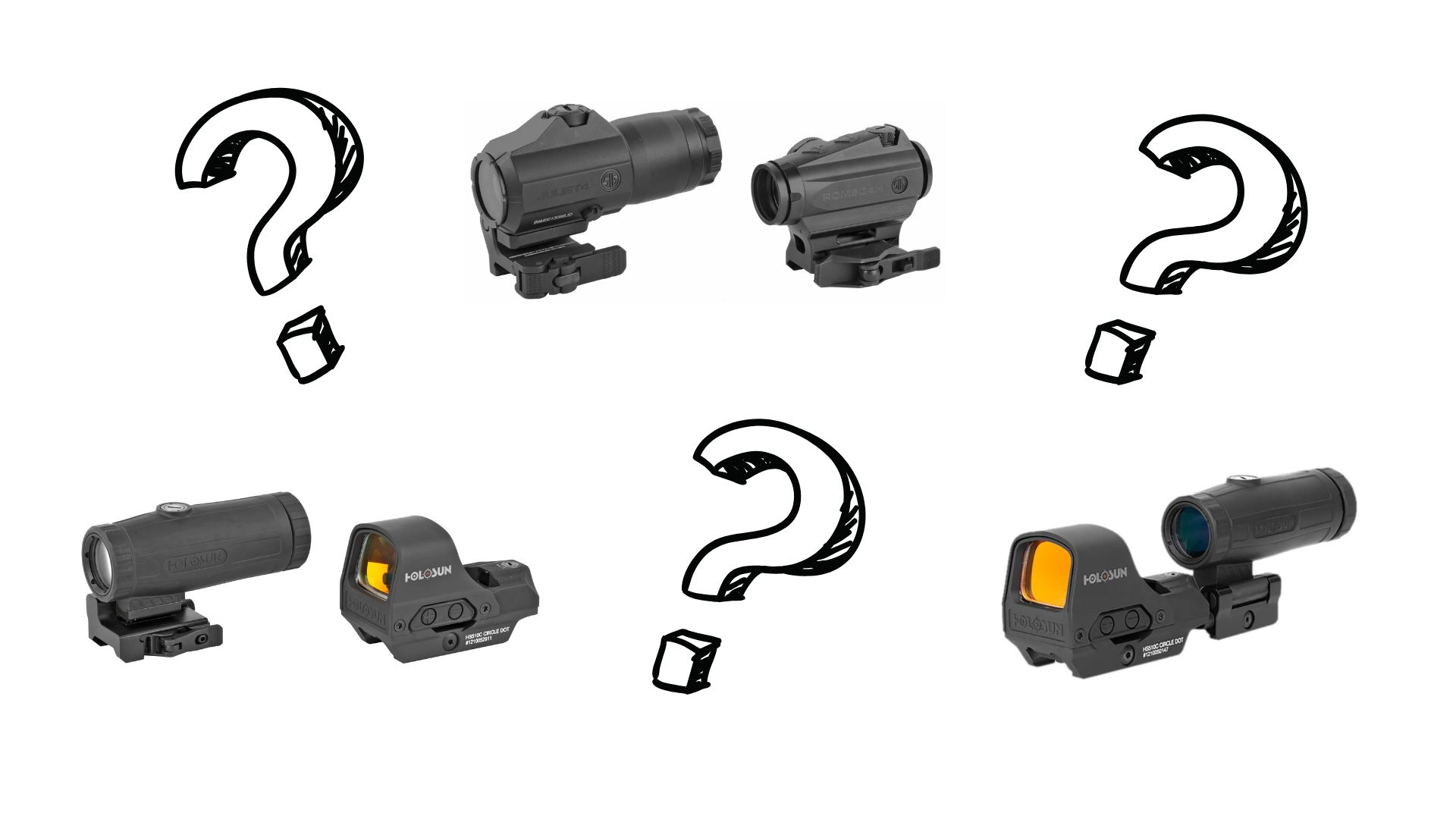
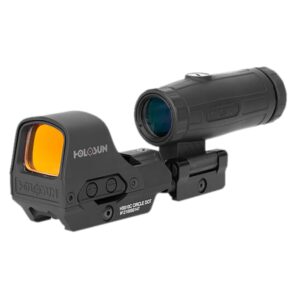
A red dot magnifier combo pairs a real red dot sight with a separate magnifier that flips in right behind it.

Your dot stays at 1x for close-range speed, and the magnifier adds extra power when you need to stretch out further.

Most magnifiers are built around 3x power, though a few specialty models go as high as 5x or 6x. That 3x standard is exactly why this combo covers 100 to 300 yards so well without adding much bulk.

A few things matter more than brand name here:

  • Match your red dot and magnifier heights so the sight picture lines up correctly.
  • Check the flip-to-side mount quality first. It’s usually the part that wears out fastest on a cheap combo.
  • Look at proven, matched pairings from the same brand rather than mixing random parts.

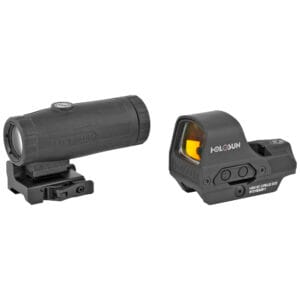
We sell some red dot magnifier combos:
Setup 3: Scope Plus Offset Red Dot Mount (For Serious Builds)

This setup uses a magnified scope as your main optic, with a small red dot mounted at 45 degrees as a backup.

The offset red dot mount lets you cant the rifle slightly and get a fast, close-range sight picture without ever touching your scope’s turrets.

Since it’s a backup optic, it also sees a lot less battery use over time than a primary sight would.

This is the setup you’ll see on patrol rifles, competition guns, and serious duty builds, especially once shots stretch past 100 yards.

Which Combo Should You Buy?

The right combo really comes down to how you use your rifle, not just your budget.

  • Truck gun or plinker: Stick with an all-in-one combo scope if you’re on a tight budget, just don’t expect it to hold up to heavy use.
  • Home defense or range use: A red dot and magnifier give you close-range speed plus reach when you need it.
  • Patrol rifle or competition: A scope with an offset red dot covers both ends of the distance spectrum without compromise.

Once you know which category fits you, picking the best red dot for AR-15 gets a lot simpler. Our budget red dot picks and under-$200 guide can help you compare specific models at affordable price points.

AR-15 Red Dot Mount Placement Tips

Where everything sits on your AR-15 depends on your rail space and what else is already mounted.

  • A long free-float handguard gives you more room to work with than a shorter factory rail. Both use the same Picatinny rail standard, so the difference is just how much of it you get.
  • If you still run iron sights, check your co-witness height before adding a magnifier or dot.
  • A magnifier needs clearance from your charging handle, since it sits right behind your primary optic.
  • An offset dot’s mounting side is often chosen based on which way your brass ejects, especially if you’re left-handed.

Always confirm your rifle is unloaded before you mount or adjust anything, and follow basic firearm safety rules whenever you’re handling it. A few minutes of planning here saves you from re-mounting everything later.

Frequently Asked Questions

Is a scope and red dot combo worth it on an AR-15?

It depends on the setup. All-in-one combo units are budget-friendly but shaky under recoil, while a red dot with a magnifier or an offset scope setup is worth it for most serious shooters.

What’s the difference between a red dot magnifier and an LPVO?

A magnifier flips in behind a fixed red dot for extra reach, while an LPVO is one scope with its own adjustable zoom and reticle built in.

Can a red dot still co-witness with iron sights if I add a magnifier?

Yes. The magnifier sits behind your red dot and doesn’t change how the dot lines up with your irons at all.

Do all-in-one combo scopes hold zero as well as separate optics?

Generally, no. Separate, quality optics are built and mounted with more precision, so they tend to hold zero far better over time.

Conclusion

An AR-15 scope red dot combo can mean three very different things, and picking the right one comes down to matching your setup to how you actually shoot.

Skip the all-in-one units for anything beyond casual plinking, and lean toward a red dot and magnifier or a scope with an offset dot instead, depending on how far you need to reach.

If you’re looking for a red dot sight, browse Gold Trigger’s red dot collection. You can also reach out to us at 713-485-5773.

Disclaimer: This article is for informational and educational purposes only and does not constitute professional, legal, or safety advice. Firearms, optics, and mounting hardware should always be installed, zeroed, and used in accordance with the manufacturer’s instructions and applicable local, state, and federal laws. Always verify your firearm is unloaded before performing any maintenance, mounting, or adjustment. Gold Trigger is not responsible for any injury, damage, or legal issue arising from the use, misuse, or installation of any product discussed in this article. Product specifications and prices are subject to change, so please confirm current details with the manufacturer or retailer before purchasing.

Comments

Leave a Reply

Your email address will not be published. Required fields are marked *

AR-15 Scope Red Dot Combo: What’s the Best for You?

AR-15 Scope Red Dot Combo: What’s the Best for You?

Reading Time: 6 mins

Searching for an AR-15 scope red dot combo? You’re about to find three completely different products hiding under that one search term.

Some are cheap all-in-one units. Others are two separate optics paired together in a smart way.

We’ll break down all three, tell you which ones actually hold zero, and help you match a setup to your rifle and your budget.

Highlights

  • All-in-one combo scopes are cheap, but many struggle to hold zero after a few hundred rounds.
  • A red dot magnifier combo stretches your effective range out to 100 to 300 yards without swapping optics.
  • An offset red dot mount paired with a magnified scope covers both close and long range.
  • Matching optic heights matters more than the brand name on the box.
  • Your use case, whether that’s a truck gun or a duty rifle, should decide your setup, not price alone.

What People Mean by “AR-15 Scope Red Dot Combo”

This search term actually covers three different setups, and most buying guides never explain that part.

  1. All-in-one combo scope: A single unit with a built-in scope, dot, and sometimes even a laser.
  2. Red dot and magnifier: Two separate optics that pair up, with the magnifier flipping in and out.
  3. Magnified scope and offset red dot: Your main scope plus a small backup dot mounted at an angle.

Once you know which setup you actually need, the rest of this guide gets a lot easier to use.

Setup 1: All-In-One Combo Scopes (Skip This One)

These are the cheap 3-in-1 or 4-in-1 units you’ll see all over online marketplaces, combining a scope, a red dot, and sometimes a laser in one body.

They look like a great deal, and that’s usually the problem.

Here’s what tends to go wrong:

  • They often lose zero after just a couple of hundred rounds of recoil. Recoil is really just repeated vibration, and engineers have long known that vibration alone can slowly loosen even a properly tightened bolt.
  • Glass quality and parallax control are often among the first things cut to hit a low price.
  • You can’t upgrade just the dot or just the scope later, since it’s one sealed unit.

These units are fine for a low-round-count truck gun or backup rifle. We wouldn’t trust one on a home-defense or duty AR-15, though.

Setup 2: Red Dot Magnifier Combo (The One Most Shooters Want)

A red dot magnifier combo pairs a real red dot sight with a separate magnifier that flips in right behind it.

Your dot stays at 1x for close-range speed, and the magnifier adds extra power when you need to stretch out further.

Most magnifiers are built around 3x power, though a few specialty models go as high as 5x or 6x. That 3x standard is exactly why this combo covers 100 to 300 yards so well without adding much bulk.

A few things matter more than brand name here:

  • Match your red dot and magnifier heights so the sight picture lines up correctly.
  • Check the flip-to-side mount quality first. It’s usually the part that wears out fastest on a cheap combo.
  • Look at proven, matched pairings from the same brand rather than mixing random parts.

We sell some red dot magnifier combos:

Setup 3: Scope Plus Offset Red Dot Mount (For Serious Builds)

This setup uses a magnified scope as your main optic, with a small red dot mounted at 45 degrees as a backup.

The offset red dot mount lets you cant the rifle slightly and get a fast, close-range sight picture without ever touching your scope’s turrets.

Since it’s a backup optic, it also sees a lot less battery use over time than a primary sight would.

This is the setup you’ll see on patrol rifles, competition guns, and serious duty builds, especially once shots stretch past 100 yards.

Which Combo Should You Buy?

The right combo really comes down to how you use your rifle, not just your budget.

  • Truck gun or plinker: Stick with an all-in-one combo scope if you’re on a tight budget, just don’t expect it to hold up to heavy use.
  • Home defense or range use: A red dot and magnifier give you close-range speed plus reach when you need it.
  • Patrol rifle or competition: A scope with an offset red dot covers both ends of the distance spectrum without compromise.

Once you know which category fits you, picking the best red dot for AR-15 gets a lot simpler. Our budget red dot picks and under-$200 guide can help you compare specific models at affordable price points.

AR-15 Red Dot Mount Placement Tips

Where everything sits on your AR-15 depends on your rail space and what else is already mounted.

  • A long free-float handguard gives you more room to work with than a shorter factory rail. Both use the same Picatinny rail standard, so the difference is just how much of it you get.
  • If you still run iron sights, check your co-witness height before adding a magnifier or dot.
  • A magnifier needs clearance from your charging handle, since it sits right behind your primary optic.
  • An offset dot’s mounting side is often chosen based on which way your brass ejects, especially if you’re left-handed.

Always confirm your rifle is unloaded before you mount or adjust anything, and follow basic firearm safety rules whenever you’re handling it. A few minutes of planning here saves you from re-mounting everything later.

Frequently Asked Questions

Is a scope and red dot combo worth it on an AR-15?

It depends on the setup. All-in-one combo units are budget-friendly but shaky under recoil, while a red dot with a magnifier or an offset scope setup is worth it for most serious shooters.

What’s the difference between a red dot magnifier and an LPVO?

A magnifier flips in behind a fixed red dot for extra reach, while an LPVO is one scope with its own adjustable zoom and reticle built in.

Can a red dot still co-witness with iron sights if I add a magnifier?

Yes. The magnifier sits behind your red dot and doesn’t change how the dot lines up with your irons at all.

Do all-in-one combo scopes hold zero as well as separate optics?

Generally, no. Separate, quality optics are built and mounted with more precision, so they tend to hold zero far better over time.

Conclusion

An AR-15 scope red dot combo can mean three very different things, and picking the right one comes down to matching your setup to how you actually shoot.

Skip the all-in-one units for anything beyond casual plinking, and lean toward a red dot and magnifier or a scope with an offset dot instead, depending on how far you need to reach.

If you’re looking for a red dot sight, browse Gold Trigger’s red dot collection. You can also reach out to us at 713-485-5773.

Disclaimer: This article is for informational and educational purposes only and does not constitute professional, legal, or safety advice. Firearms, optics, and mounting hardware should always be installed, zeroed, and used in accordance with the manufacturer’s instructions and applicable local, state, and federal laws. Always verify your firearm is unloaded before performing any maintenance, mounting, or adjustment. Gold Trigger is not responsible for any injury, damage, or legal issue arising from the use, misuse, or installation of any product discussed in this article. Product specifications and prices are subject to change, so please confirm current details with the manufacturer or retailer before purchasing.

Leave a Reply

Your email address will not be published. Required fields are marked *

Shopping cart0
There are no products in the cart!